Greece is one of the top summer destinations in the world. And the most prominent of its locations are the Greek islands in the Aegean Sea. And although Mykonos, Santorini, Kos, and Rhodes are world-renowned, there are some lesser-known islands you must discover this summer when visiting Greece.
Tinos and Kythnos are two Greek islands in the Cyclades that can prove the Greek summer is not only great beaches, white houses, and endless clubbing. These two islands are the perfect combination of clear blue skies and sunshine, beautiful crisp sea, traditional villages with gracious people, and superb culinary traditions.
Tinos
Tinos is one of the largest islands in the Cyclades, and for many decades it was characterised as a religious destination. The great church of Panagia (Virgin Mary), with the miraculous icon in the island’s capital, had turned Tinos into a place of pilgrimage. Thousands of people came to worship, and by the evening, most of them had left the island. This resulted in the rest of the island remaining unknown and without significant tourist development.
Photo credit: Antonis Tsapepas
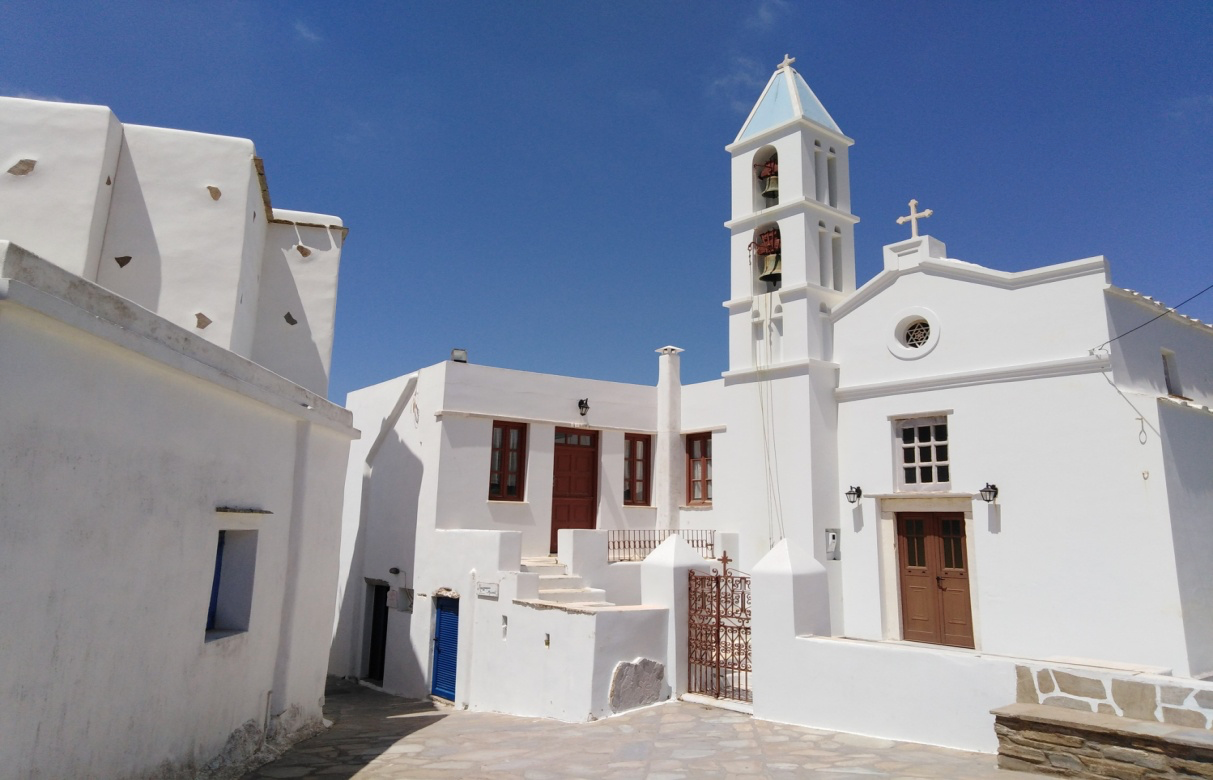
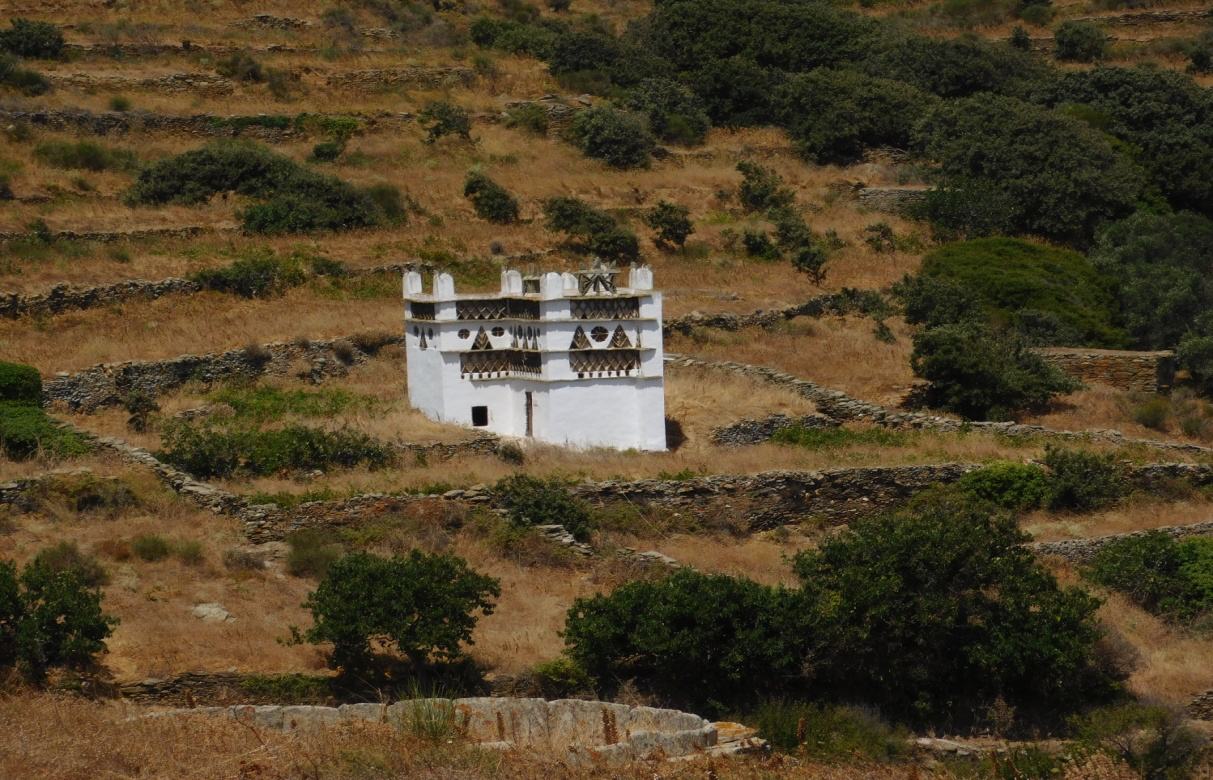
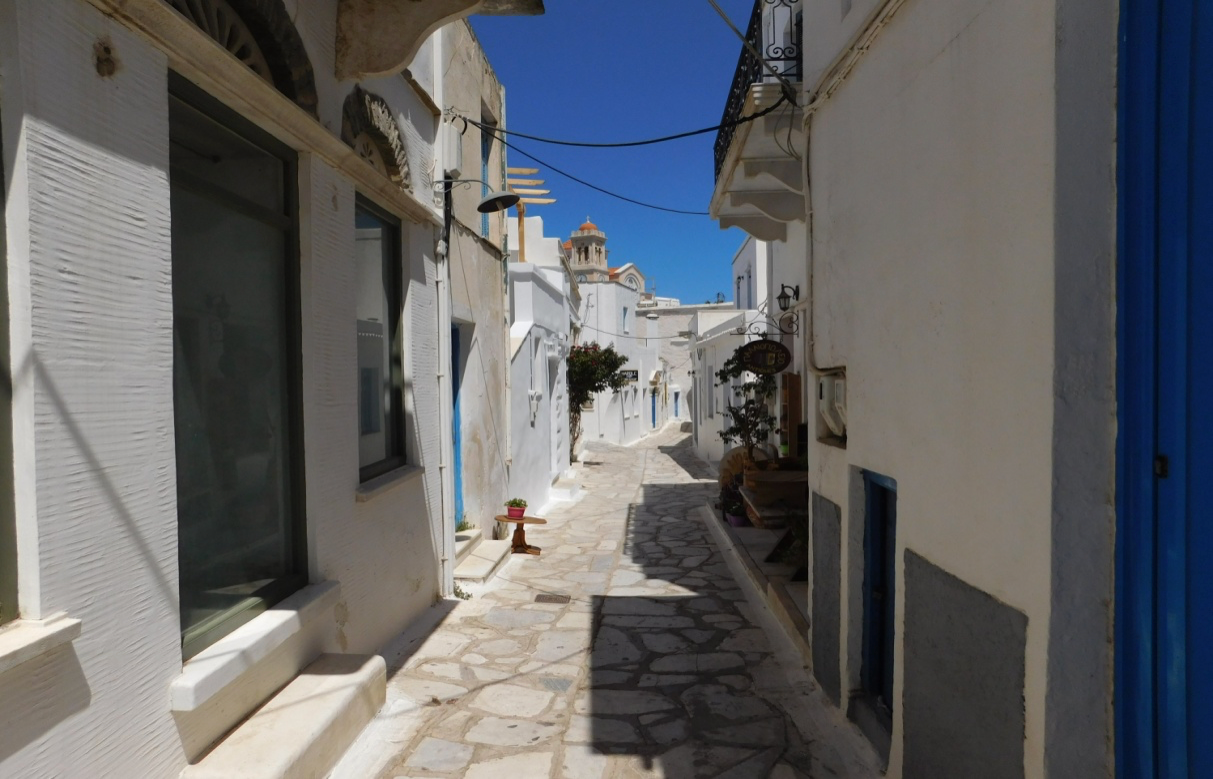
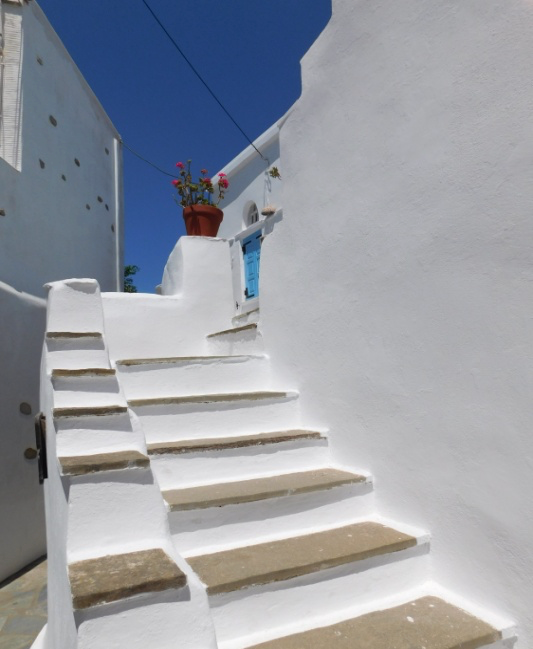
This has undoubtedly changed in the last two decades, and Tinos has developed into a unique destination with its own distinct personality. The mainland of the island is barren with little greenery and scattered with dozens of picturesque villages, each competing with the other in beauty. White houses of unique aesthetics, small churches with colourful roofs, narrow alleys, and the most elaborate pigeon houses in all of Greece create an unforgettable combination.
Tinos’ pigeon house (Photo credit: Antonis Tsapepas)
At the same time, Tinos has developed into a unique culinary destination where traditional cooking combines modern yet haute cuisine. You will find excellent taverns with many years of history that serve local specialities, as well as trendy restaurants with distinguished chefs
The island also has some exceptional beaches where you can enjoy the endless blue of the Aegean, such as Kolymbithra, Livadi, and Agios Ioannis Porto.
But Tinos is above all its villages, and you should take advantage of three of them if you are visiting the island: Pyrgos, Volax, and Smardakito.
The largest village on the island is Pyrgos. Due to the expansion of commercial shipping and marble mining, Pyrgos had its economic zenith in the 18th and 19th centuries. The emergence of marble sculpture in the region resulted from marble excavation. The marble sculptors of Pyrgos were well-known across Europe. Therefore, the entire village is an open-air marble sculpture gallery. Beautiful marble sculptures are used to embellish Pyrgos’ streets, doors, houses, fountains and churches.
Pyrgos (Photo credit: Antonis Tsapepas)
Volax is located on a mountain plateau in the centre of the island, which has been inhabited for 2,000 years. Large circular rocky outcrops called ‘volakes’ are dispersed throughout the region, giving the village its name. There are numerous theories regarding the formation of the rocks; however, none of them have been validated. Additionally, the region is well-known for its still-existing traditional basket-weaving workshops in the village. The majority of the houses have been restored, and the walk through the winding lanes of the village is full of unforgettable images.
Volax (Photo credit: Antonis Tsapepas)
Photo credit: Antonis Tsapepas
Smardakito is a small village at the centre of the island, but it is also one of the most scenic. The houses are beautifully kept, and the village’s little centre square, complete with a fountain and church, is stunning. Because of the abundance of natural springs in the village and the surrounding region, the place has an extremely high density of trees and flora for an island as arid as Tinos. Tinians believe it to be the most beautiful village.
Smardakito (Photo credit: Antonis Tsapepas)
Photo credit: Antonis Tsapepas
Kythnos
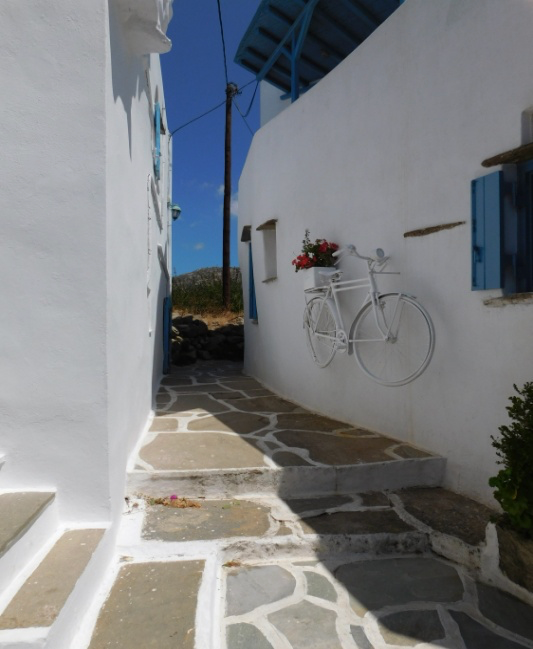
Kythnos is a distinctive island that, for a long time, was not included in the growth of tourism on the other Cyclades islands. Every square inch of this desolate island, a mountain peak in the middle of the sea, has been carved and moulded by hand. All around the island are stone walls, stone farmhouses, and tiny white churches, which, together with low, rounded prickly plants, make a wild yet beautiful scenery.
Photo credit: Antonis Tsapepas
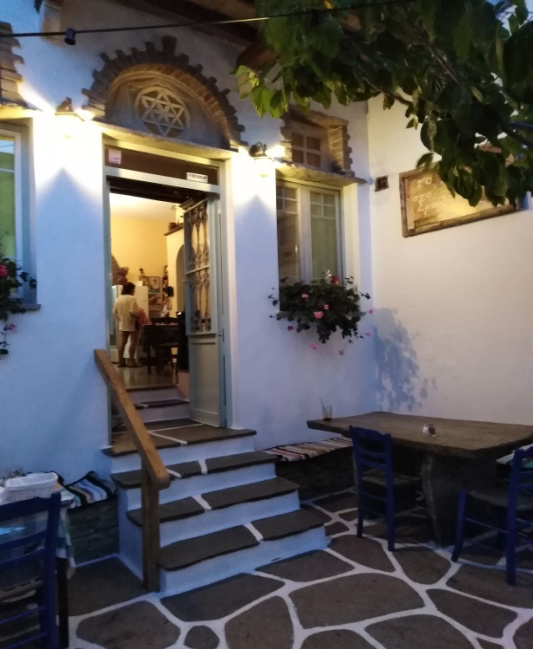
The majority of Kythnos’ inhabitants continue to work in agriculture and animal husbandry. They are highly driven and are known for their unpretentious hospitality. These elements create a welcoming atmosphere for the visitor, who will instantly feel at home and forget that they are only there for a short time.
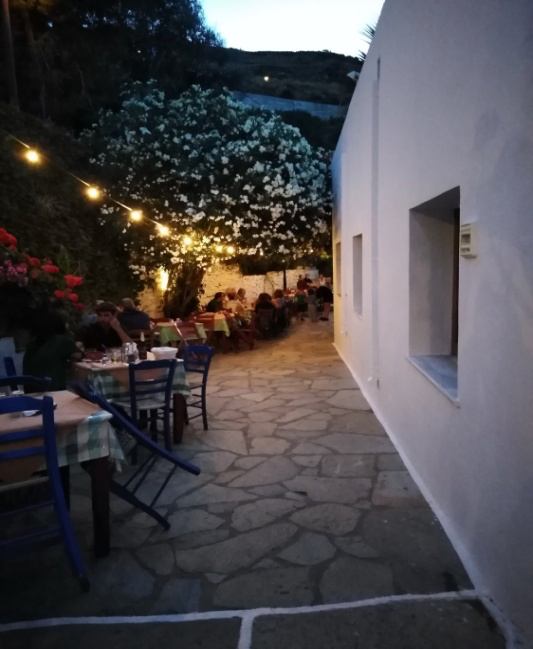
Although small in size, the island of Kythnos has many beaches that can satisfy every taste. At the same time, it’s another spot with a series of excellent restaurants and taverns offering exceptional food at good prices.
At Kythnos, there are definitely three places that every visitor should visit in order to get a complete picture of the island: Kolona Beach, Chora and Dryopida.
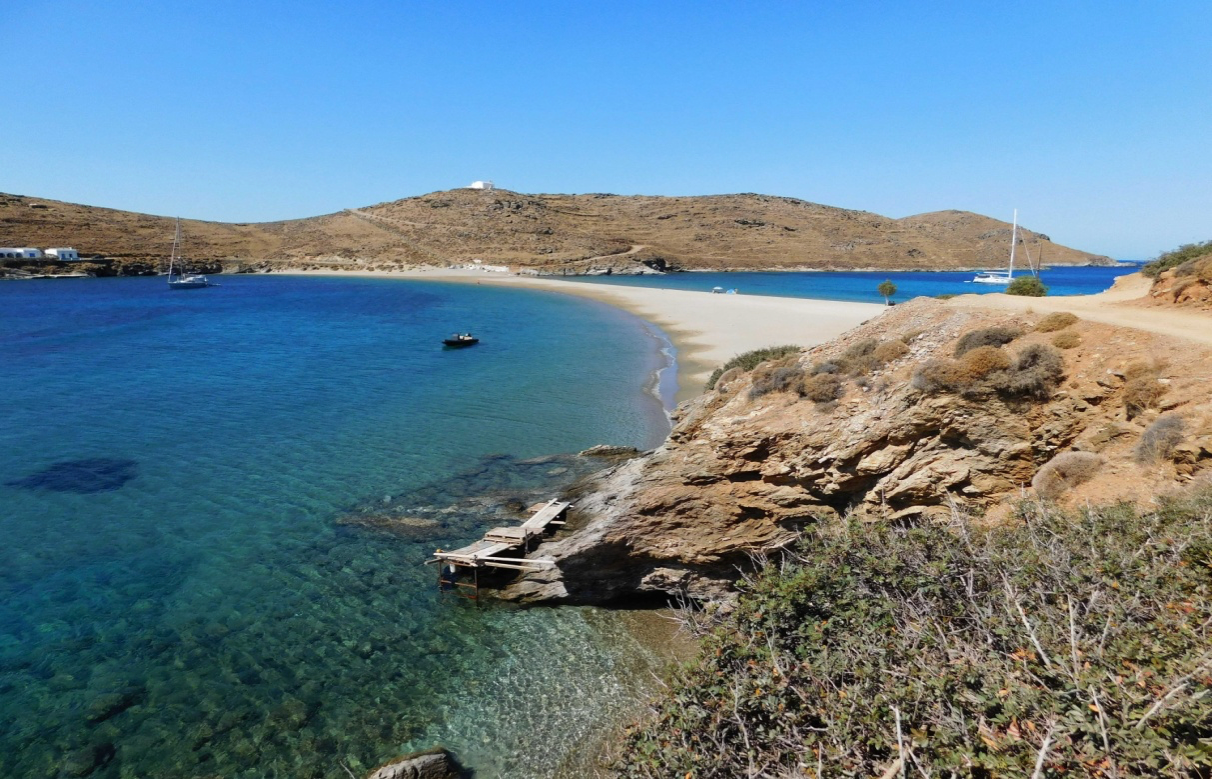
Kolona Beach is considered one of the most beautiful beaches in Greece. It is unique mainly due to its geomorphological peculiarities. It is essentially a sand strip that links Kythnos to the islet of Agios Loukas, at the summit of which is the beautiful church of the same name. The beach gets its name from the strip, which resembles a column (kolona in Greek). The sea is on both sides, resulting in two beaches with deep blue waves and beautiful sand. There is also a bar with sun loungers and other amenities.
Kolona (Photo credit: Antonis Tsapepas)
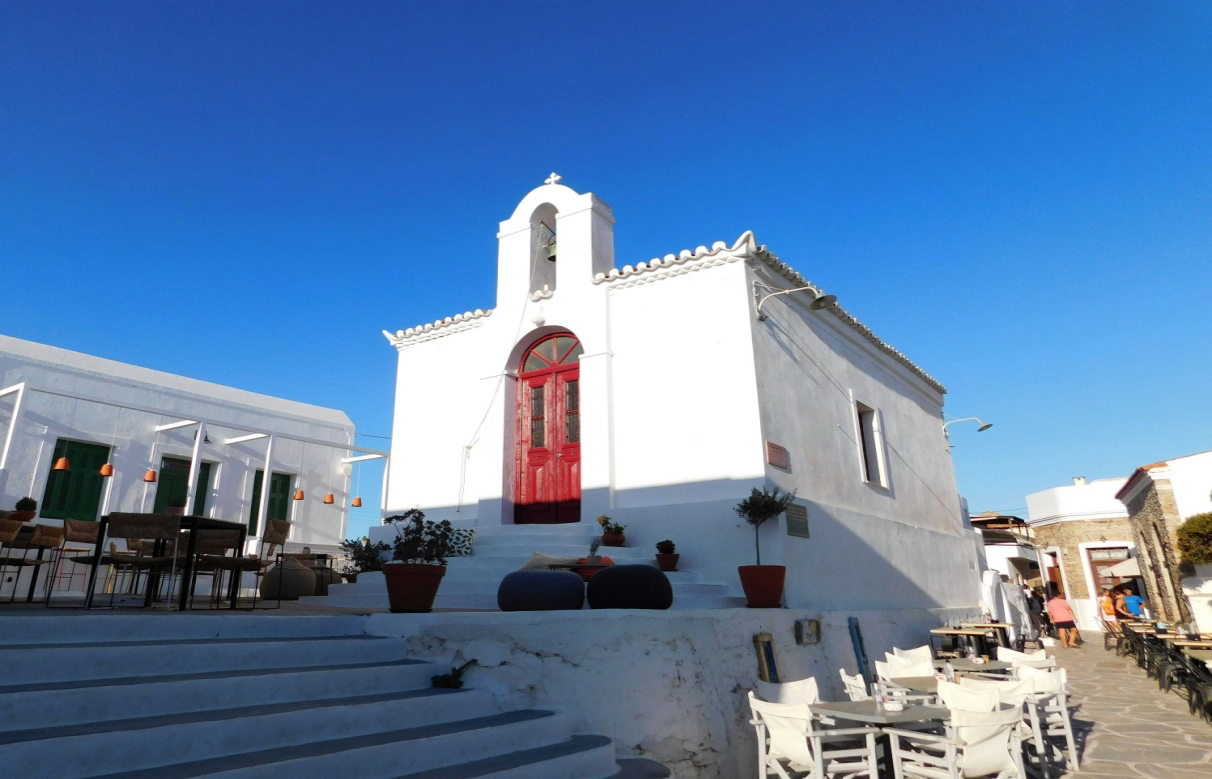
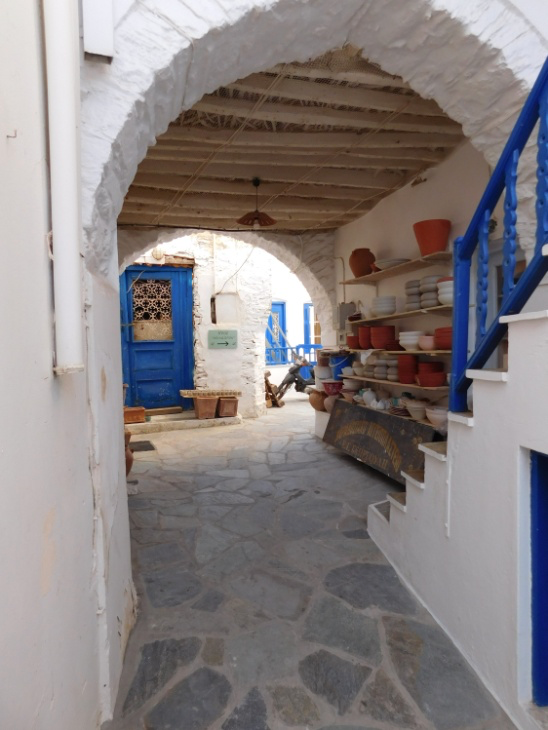
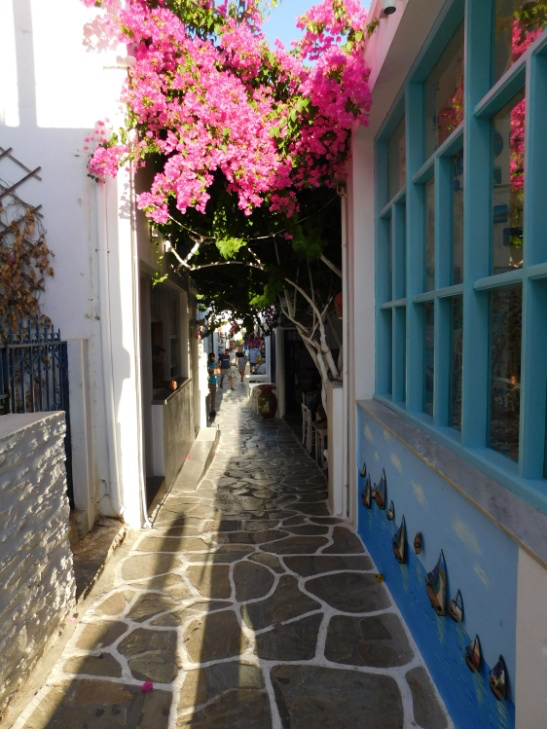
The capital of the island is the lovely and unique Chora. It has a distinctive feel despite not being situated in an outstanding location like the capitals of other Greek islands and not having a direct view of the sea. All the stores, bars, and restaurants are located on the main street, and then a maze of peaceful lanes with courtyards, balconies, passageways, and arches begins, where the local people go about their daily lives. No visitor is unmoved by the simplicity and unpretentiousness of Chora.
Chora (Photo credit: Antonis Tsapepas)
Photo credit: Antonis Tsapepas
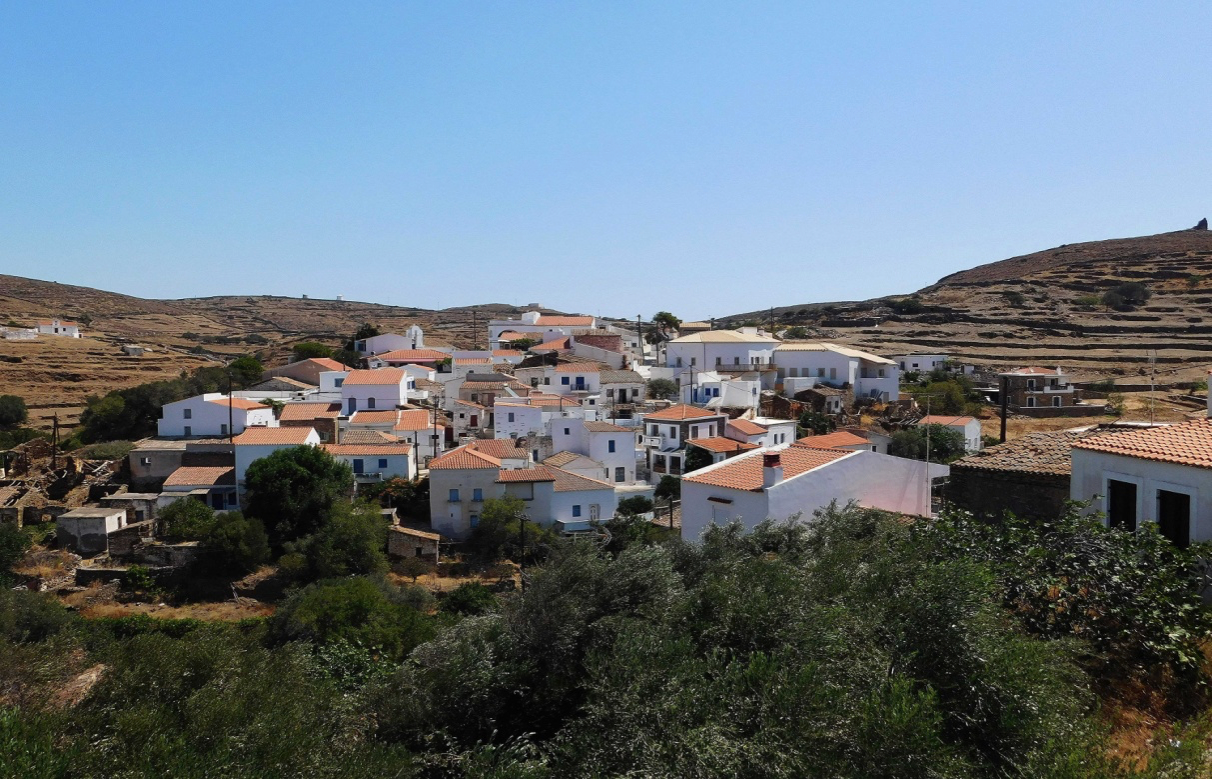
But aside from Chora, the island is also proud of Dryopida, a picturesque mountain village in the southern half of the island that is nestled between two hills. The majority of the village’s homes have tiles covering their roofs, which is a result of the development of ceramic art there in the past. The Katafyki Cave, which has stalactites and stalagmites as well as natural passages and manufactured entrances, is close to the village’s heart. It was once an iron mine and is now only available for guided excursions. The village itself is a charming maze with modest stores, bars, and cafés at every turn.
Photo credit: Antonis Tsapepas
Tinos and Kythnos are two real jewels of the Aegean that deserve to be discovered. They are two representative examples of a typical Greek island with all the advantages but few of the disadvantages of tourist development. They are two unique places full of sky, sea and tradition.
If you are looking for other cultural destinations, visit our website’s Art and Culture page.
We use cookies on our website to give you the most relevant experience by remembering your preferences and repeat visits. By clicking “Accept”, you consent to the use of ALL the cookies.
This website uses cookies to improve your experience while you navigate through the website. Out of these, the cookies that are categorized as necessary are stored on your browser as they are essential for the working of basic functionalities of the website. We also use third-party cookies that help us analyze and understand how you use this website. These cookies will be stored in your browser only with your consent. You also have the option to opt-out of these cookies. But opting out of some of these cookies may affect your browsing experience.
Necessary cookies are absolutely essential for the website to function properly. These cookies ensure basic functionalities and security features of the website, anonymously.
Cookie
Duration
Description
cookielawinfo-checbox-analytics
11 months
This cookie is set by GDPR Cookie Consent plugin. The cookie is used to store the user consent for the cookies in the category "Analytics".
cookielawinfo-checbox-functional
11 months
The cookie is set by GDPR cookie consent to record the user consent for the cookies in the category "Functional".
cookielawinfo-checbox-others
11 months
This cookie is set by GDPR Cookie Consent plugin. The cookie is used to store the user consent for the cookies in the category "Other.
cookielawinfo-checkbox-necessary
11 months
This cookie is set by GDPR Cookie Consent plugin. The cookies is used to store the user consent for the cookies in the category "Necessary".
cookielawinfo-checkbox-performance
11 months
This cookie is set by GDPR Cookie Consent plugin. The cookie is used to store the user consent for the cookies in the category "Performance".
viewed_cookie_policy
11 months
The cookie is set by the GDPR Cookie Consent plugin and is used to store whether or not user has consented to the use of cookies. It does not store any personal data.
Functional cookies help to perform certain functionalities like sharing the content of the website on social media platforms, collect feedbacks, and other third-party features.
Performance cookies are used to understand and analyze the key performance indexes of the website which helps in delivering a better user experience for the visitors.
Analytical cookies are used to understand how visitors interact with the website. These cookies help provide information on metrics the number of visitors, bounce rate, traffic source, etc.
Advertisement cookies are used to provide visitors with relevant ads and marketing campaigns. These cookies track visitors across websites and collect information to provide customized ads.