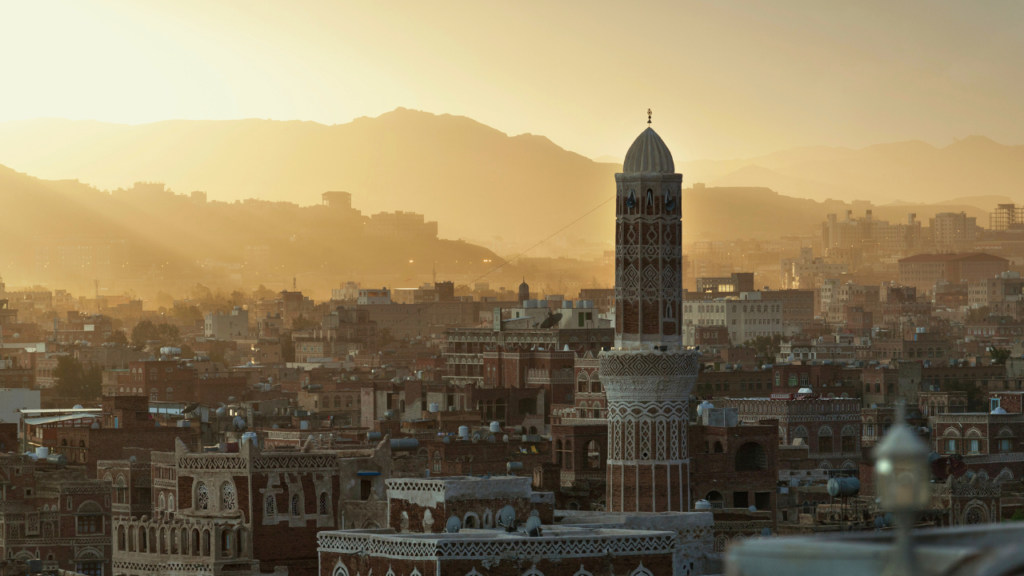





Waleed was just six years old when he left Yemen. Thirteen years later, he returned to a country still scarred by conflict.
From Aden, a port city along the shores of the South Yemen Ocean, he had no idea his homeland would become a place he could never truly return to.
After completing his national military service and earning a degree in biochemistry, he was swept into the chaos of Yemen’s 1994 civil war.
“South Yemen is communist and opposes the North’s ideology—like Korea,” he said.
Following the war, Waleed travelled to Africa and then Asia for a year before spending another year in the UAE. He finally returned to Yemen in 2010, but the country had been plagued by instability for decades. “For 50 years, Yemen has always had crazy politicians; it’s always been war,” he remarked. The current conflict has raged for 10 years, marking the longest period of unrest in Yemen’s history.
In 2011, civil strife erupted once more against the government, followed by another wave of violence in 2014. Corruption engulfed the entire nation, and while he once envisioned returning, the dire situation made that impossible. His dream of independence—both for Yemen and himself—remained out of reach.
“No government, no policies.”
Waleed returned to the UAE, where, in 2014, he began using Twitter/X to speak out against local policies. “But the UAE hates this; you cannot express your opinion or enjoy freedom,” he explained.
His activism led to the sudden cancellation of his visa. When he approached the immigration authorities, they informed him that he had to leave the country within two weeks.
That period marked the hardest chapter in his life—he had to abandon everything: his home, his car, his belongings, and his friends. But he couldn’t go back to Yemen.
It was a fortunate turn of fate, as he had ten days remaining on his UK short-stay visa. “Applying for a UK visa as a Yemeni local is very difficult,” he explained.
He feared for his life, opposed to the factions in both the North and South, and so he left it all behind, flying into Heathrow on September 6, 2019.
The moment he landed, reality sank in. He knew no one and felt lost. He spent his first day in the airport, using the multi-faith room to pray, connect to Wi-Fi, and contemplate his next steps. He had Facebook friends but had never met them, yet he knew of a Yemeni Imam in Sheffield.
“Yallah, come to Sheffield,” the Imam told him.
His contact offered him shelter for the night and connected him with a local Yemeni solicitor. When Waleed asked how he could find his first job, he was met with a harsh truth.
“I’m sorry to say, but you are a refugee, Waleed. It doesn’t work like that; you need to forget who you were before.”
Waleed’s first appointment with the Home Office took place in Croydon, where he underwent a screening process, providing documents and answering seemingly endless questions. He stood in a long queue in the rain, surrounded by others—Africans, Iranians, Yemenis, Syrians—men, women, and children, all seeking safety.
His 10.30am appointment finished at 5pm. When asked if he had any connections or resources in the UK, he could only respond with a series of “no, no, no.”
They moved him to temporary accommodation–an old church that housed over 300 people—families, boys, girls, and young children.
Each room was cramped, hosting six to ten individuals, and for four months, he lived there whilst volunteering at various places, helping fellow refugees with paperwork, and attending police and court sessions after witnessing several crimes at the church.
During this time, the Home Office began arresting and deporting numerous Yemenis, prompting him to participate in campaigns and protests against these actions. He engaged in interviews with Sky News, The Guardian, and The Independent, writing extensively about the situation. He helped lead over five campaigns, successfully pressuring authorities to halt deportations—at least temporarily.
Together with friends, he established Facebook and WhatsApp groups aimed at changing perceptions about refugees. “We come here for safety, not benefits,” he said. “We are not here to steal jobs.” Their groups now encompass over 400 people, providing advice on education, British lifestyle, and cultural integration, helping others who, like him, are still waiting for their independence.
The initiative, Fast Track Learn English, comprises English-speaking volunteers who offer classes in technology, engineering, medicine, and marketing to enhance participants’ skills. Waleed believes education is key to fighting poverty and crime. “If people can work, they can be independent.”
Now, he has been waiting for his Home Office interview for two and a half years; he still waits for his own independence.
When I asked if he planned to stay in London, he replied with conviction, “Of course! I love the freedom, everything I’ve built, the friendly people. I can challenge anything with total freedom and write whatever I want without breaking the law. You can’t find these opportunities anywhere else. Freedom is valuable––you know, freedom is something big.”
He acknowledged the harrowing journey many Yemenis face when travelling to the UK, particularly for women crossing through Africa, Greece, and Spain. “Some suffer serious mental health issues from the journey. The press always seeks these stories,” he remarked.
Waleed considers himself fortunate. Despite living in another temporary house, where he shares space with 15 other individuals, he has found a sense of community. Although he’s the only Arab among them, the diverse backgrounds, languages, and culinary traditions have fostered a familial bond built on mutual respect and understanding.
As our conversation drew to a close, he wished me well.
“Be safe,” he said. “Be happy. That is most important.”
This is the fourth and final intriguing article Amy Aed shared with me about the compelling interviews she conducted with refugees in the U.K. and discussed why their journeys ought to be publicised. Once again, Amy explored the theme of survival as a journey. Her aim and my hope is to convey these experiences through the lenses of safety and self-determination, reflecting our objective of inspiring readers about how travel impacts identity and purpose.
If you are looking for more cultural stories, visit our website’s Art and Culture page.
Amy Aed is a Welsh journalist with over a decade of experience reporting from some of the most remote corners of the world. Her work focuses on telling untold stories that intersect culture, adventure, and social issues
This article was written by Amy and is based on the personal testimony Waleed gave her when she interviewed him over several weeks. Waleed is a Yemeni refugee living in the U.K., who has shared his journey with the knowledge and has given consent for publication. The account is drawn from the interview conducted by Amy, during which Waleed provided details about his experiences. Whilst every effort has been made to accurately represent his story, certain details, including specific dates, locations, and personal identifiers, may be inaccurate. The views expressed in this article are those of Waleed and do not necessarily reflect the official stance of Voyagers Voice. The purpose of this piece written by Amy is to focus attention on the obstacles that refugees face, such as conditions that exist in some asylum-seeking institutions. It is essential to note that, whilst we aim to give reliable and unbiased information, the article does represent Waleed’s own story and experiences, which are unique to him. Voyagers Voice has made the necessary efforts to verify the contexts offered in accordance with our editorial standards. However, due to the delicate nature of refugee and asylum situations, certain information may have been altered or deleted to protect the persons concerned, follow ethical journalism practices, and avoid legal ramifications.
| Cookie | Duration | Description |
|---|---|---|
| cookielawinfo-checbox-analytics | 11 months | This cookie is set by GDPR Cookie Consent plugin. The cookie is used to store the user consent for the cookies in the category "Analytics". |
| cookielawinfo-checbox-functional | 11 months | The cookie is set by GDPR cookie consent to record the user consent for the cookies in the category "Functional". |
| cookielawinfo-checbox-others | 11 months | This cookie is set by GDPR Cookie Consent plugin. The cookie is used to store the user consent for the cookies in the category "Other. |
| cookielawinfo-checkbox-necessary | 11 months | This cookie is set by GDPR Cookie Consent plugin. The cookies is used to store the user consent for the cookies in the category "Necessary". |
| cookielawinfo-checkbox-performance | 11 months | This cookie is set by GDPR Cookie Consent plugin. The cookie is used to store the user consent for the cookies in the category "Performance". |
| viewed_cookie_policy | 11 months | The cookie is set by the GDPR Cookie Consent plugin and is used to store whether or not user has consented to the use of cookies. It does not store any personal data. |