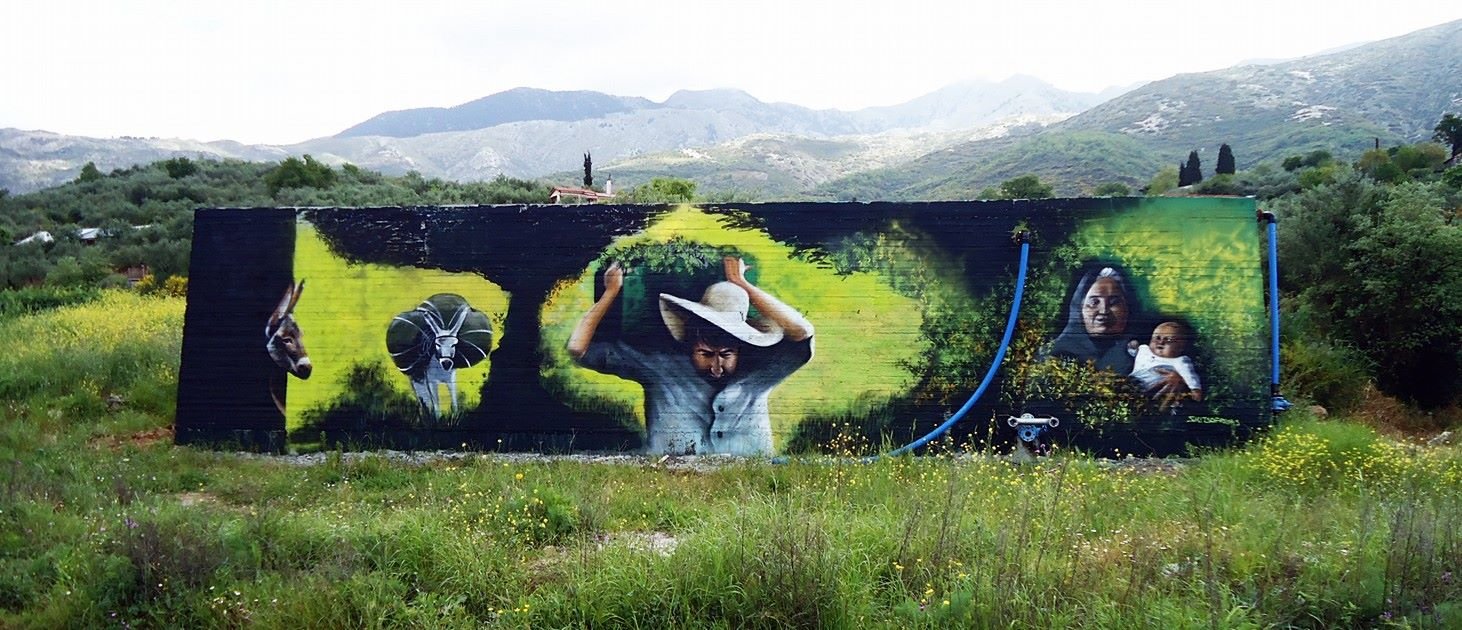
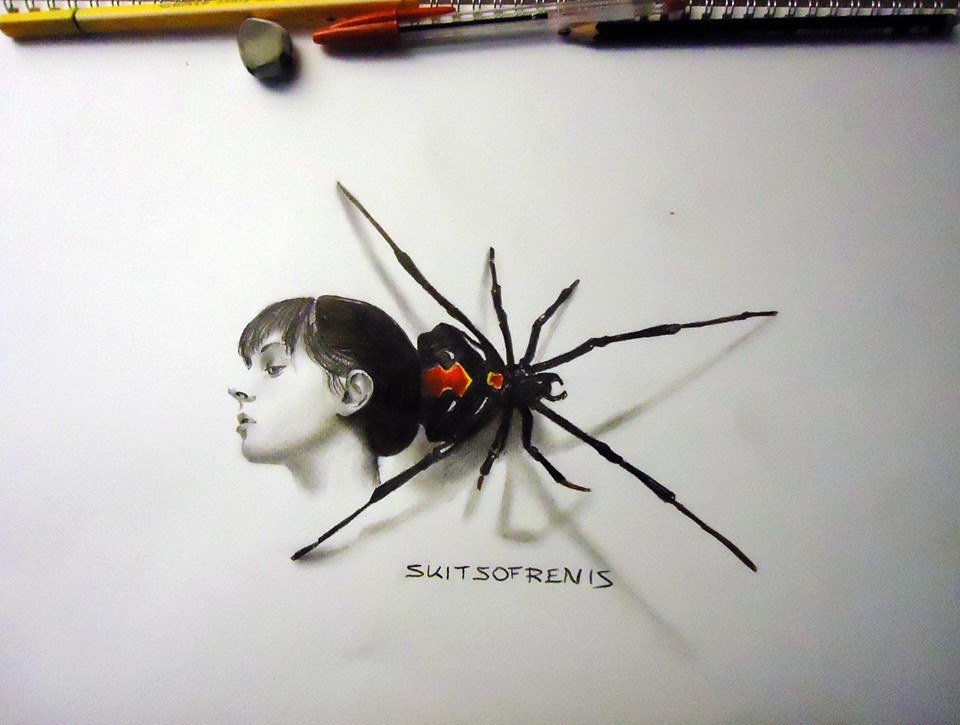
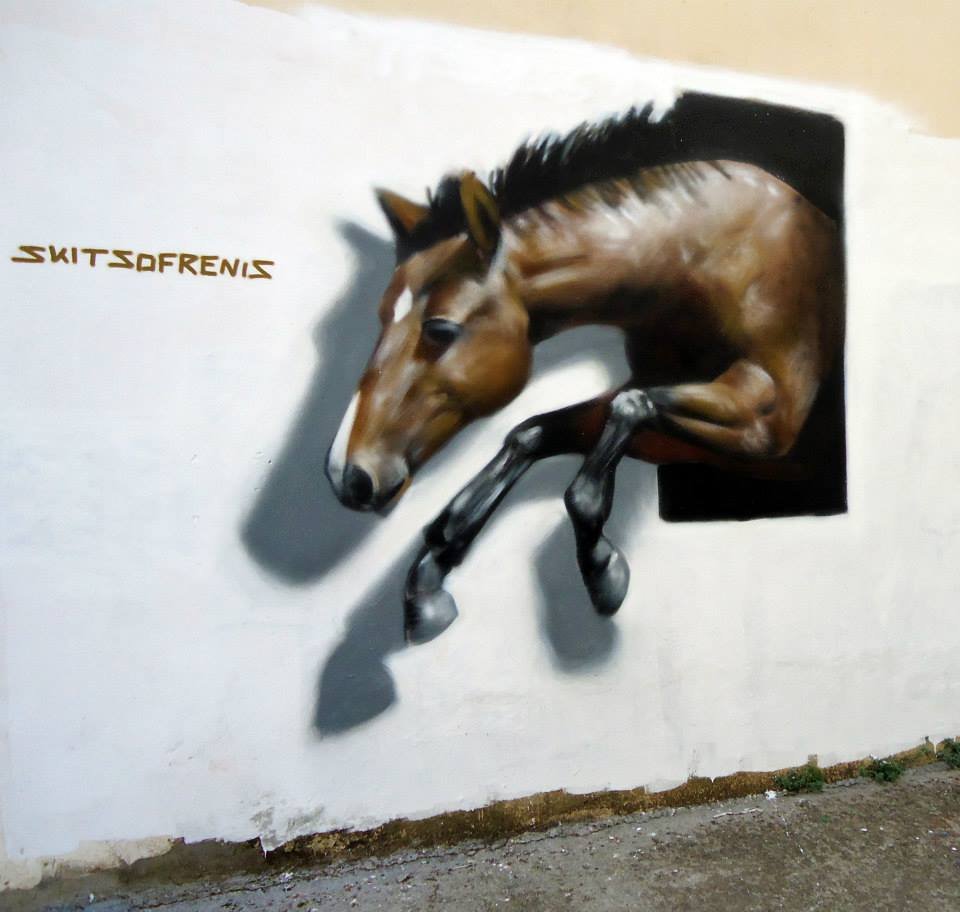
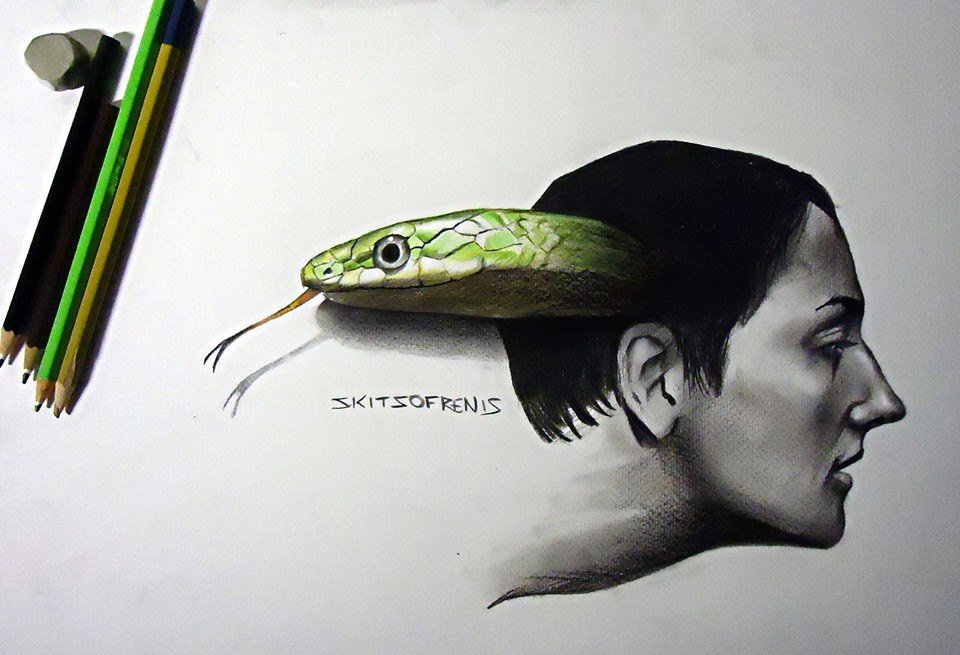
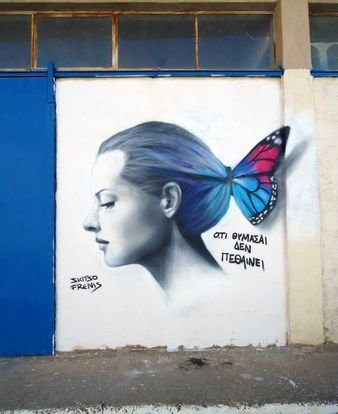
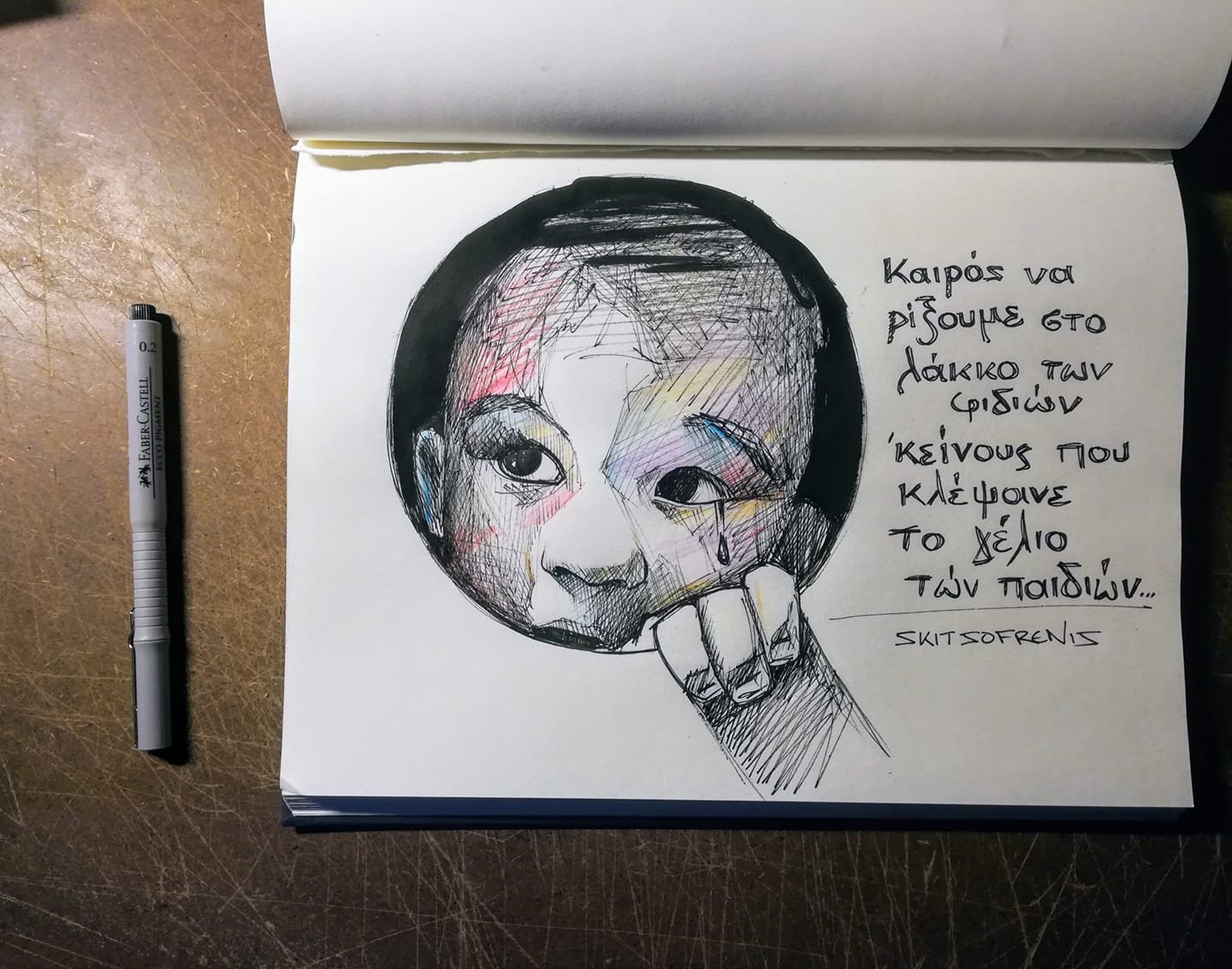
This month on Voyagers Voice, we interviewed Costas Louzis, also known as Skitsofrenis, a Greek street artist. He was born in 1984 and raised in a small village in the Messinian region of Mani, about 20 minutes drive from Kalamata. He began sketching and drawing at the age of seven and has remained self-taught as an artist ever since. In October 2008, he was asked to paint a small mural on a wall above Kalamata to educate passengers about environmental issues; it was his first encounter with spray cans and street art in general.
He quickly recognised the power of public display image and decided to express himself through walls while also achieving some professional murals. He has established himself as one of Greece’s greatest visual artists. Skitsofrenis is a wordplay that means a mind full of sketches.
What was the defining moment when you realised you wanted to be a street artist? What prompted you to start working on a wall?
Back in October 2008, a group of people from Taygetos’ burned villages (from the 2007 fires) were looking for someone to create a mural to prevent the same disaster by informing people about environmental hazards.
I volunteered to paint my first mural as a challenge for myself, and when I finished, the impact made me realise that a message on a wall spreads faster than a sketch on a book. I made the decision to become a street artist there.
In an earlier interview, you stated that street art is both a responsibility and a political act. How would you define street art today?
Unfortunately, today has devolved into a catchy clickbait viral lifestyle Instagram trend that I despise.
What do you think the influences and references to other artists are in your work?
I was influenced by everyone at first while attempting to find my style, but after a few years, I believe the influences faded and I am no longer influenced by anyone.
In recent years, street art has grown in popularity, and in many cases, it has become a tourist attraction. How do you feel about tourists, in addition to locals, appreciating your works of art?
Tourists have shown great respect and admiration – in some cases far more than locals – and I believe this is because visual arts are more prevalent in their home countries.
You have travelled to many Greek and foreign cities to paint. Which of these experiences could you single out?
Naxos, of course. The experience that I had in Naxos as a painter was unique because of the scenery that influenced my art there.
Of the cities you have visited, which one do you think stands out in terms of street art?
Definitely Thessaloniki. The first graffiti appeared in Kalamaria (Thessaloniki) back in the day, and the city has kept it alive with wonderful additions to its walls. There is a strong culture there.
Where in the world would you like to be able to paint a mural?
On a rooftop in the Bronx, New York, listening to old-school hip hop.
Does the place where you create the mural influence the subject of the artwork?
Yes, most of the time my surroundings inspire me to create something that almost perfectly fits the situation.
You frequently combine images and words in your work. Do you think that this makes the message more powerful? Is it an influence of your involvement in hip hop?
As an ultimate artistic challenge, I try to combine words and pictures to express myself. Hip-hop has certainly played a role, but primarily because I want to entice the eyes with the image and inform the brain with the words.
Many environmentalists complain about street art because they think that painting also creates pollution. What do you have to say to them?
The spray cans I use have ISO for environmentally friendly use, and most brands now have water-based spray cans. Most of the artists I know, including myself, recycle aluminium cans.
Do you think there is concern that street art will deteriorate and turn into a purely commercial product now that it has emerged from the edges and gained popularity?
Yes, but even if it dies completely, something else will emerge; nobody expected graffiti and later street art to appear in the 1970s, so I’m crossing my fingers.
If you want to read more interviews about art, culture and the world of travel, visit the Interviews page of our website.
| Cookie | Duration | Description |
|---|---|---|
| cookielawinfo-checbox-analytics | 11 months | This cookie is set by GDPR Cookie Consent plugin. The cookie is used to store the user consent for the cookies in the category "Analytics". |
| cookielawinfo-checbox-functional | 11 months | The cookie is set by GDPR cookie consent to record the user consent for the cookies in the category "Functional". |
| cookielawinfo-checbox-others | 11 months | This cookie is set by GDPR Cookie Consent plugin. The cookie is used to store the user consent for the cookies in the category "Other. |
| cookielawinfo-checkbox-necessary | 11 months | This cookie is set by GDPR Cookie Consent plugin. The cookies is used to store the user consent for the cookies in the category "Necessary". |
| cookielawinfo-checkbox-performance | 11 months | This cookie is set by GDPR Cookie Consent plugin. The cookie is used to store the user consent for the cookies in the category "Performance". |
| viewed_cookie_policy | 11 months | The cookie is set by the GDPR Cookie Consent plugin and is used to store whether or not user has consented to the use of cookies. It does not store any personal data. |