

“Welcome! You are home now!”
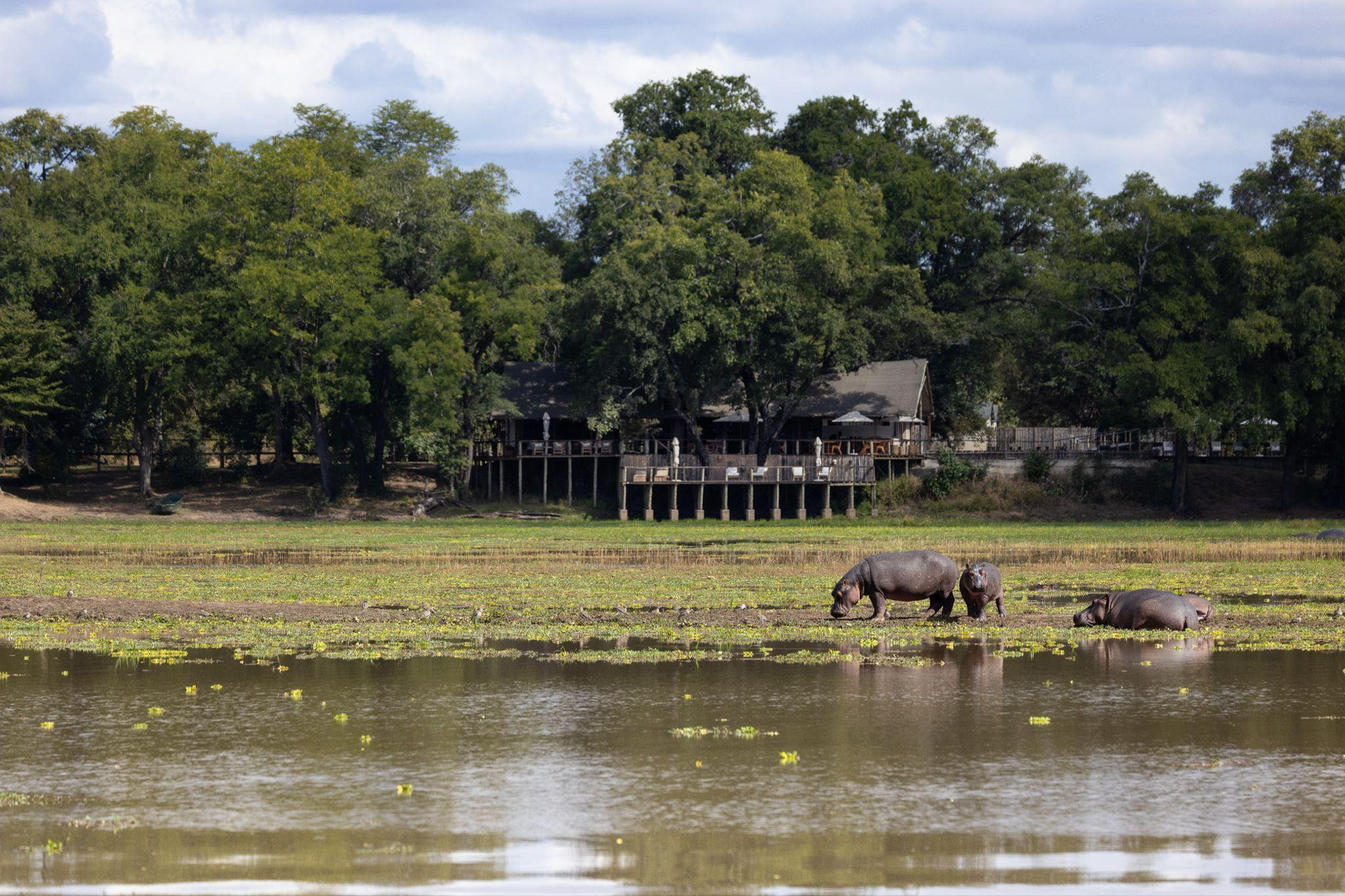
Warm greetings echoed as though I were a returning friend instead of a dishevelled writer who’d only just arrived. In my rumpled linen and dusty trekking shoes, I walked through the elegant, open-air lobby, savouring the chilled hibiscus tea placed in my hand as I took a seat on the deck. The Zambezi River, swollen and flowing with purpose, lay just metres away.
This was my first time in Zambia, and I was mere minutes into my arrival at Royal Chundu, a luxury lodge 30 kilometres upstream from Victoria Falls. Fresh off a week of traversing Zimbabwe’s Hwange National Park, I was ready to relax in one place for a few nights and — I hoped — learn something about Zambian culture.
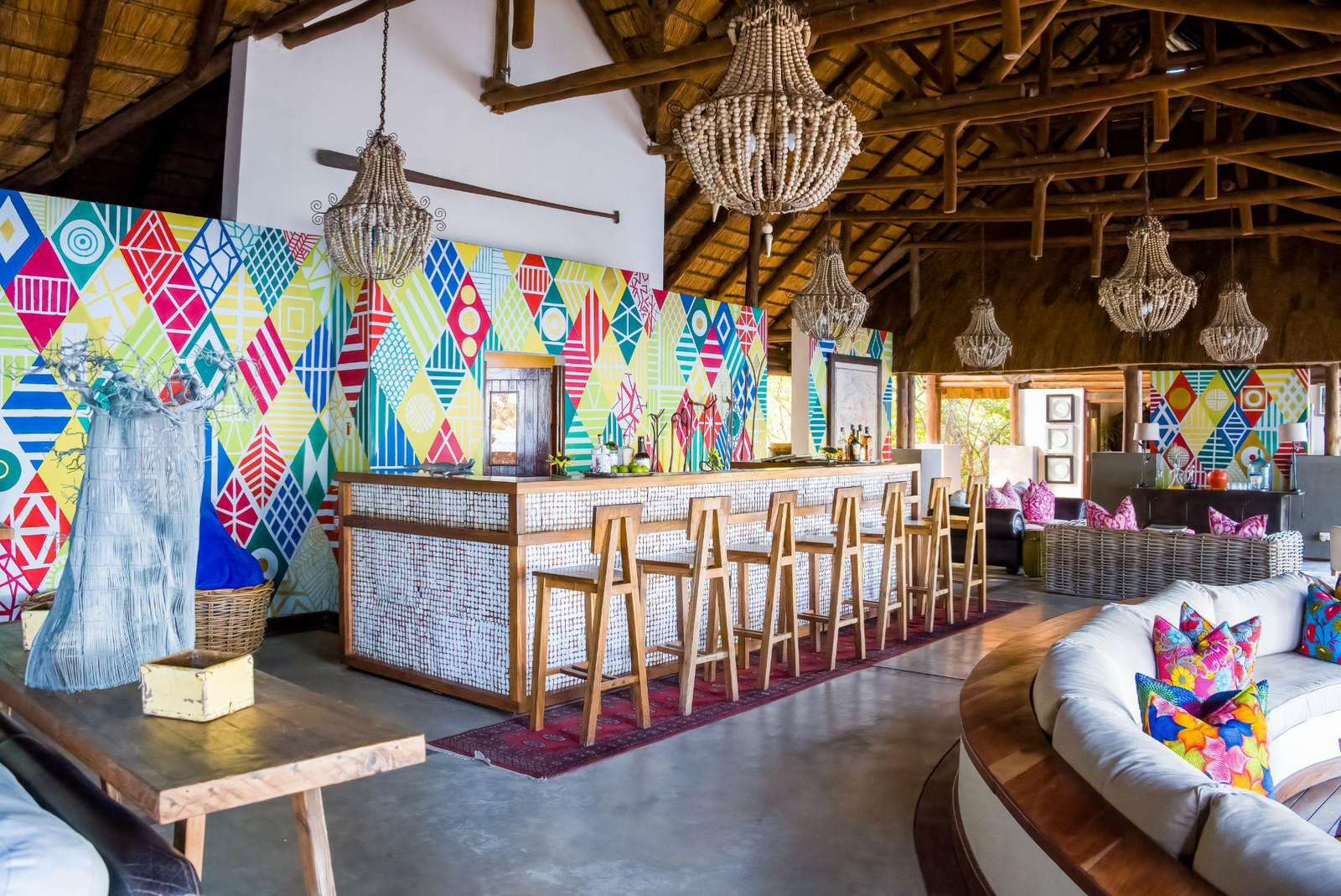
Amid the rich blues of the Zambezi, the greenery made lush with nourishment from sunlight and fresh water, and a sky that would soon illuminate in magnificent shades of blush and copper, I delighted in all the colours of this special hideaway. The colour was truly everywhere at Royal Chundu; the turquoise pool, the vibrant murals, the pinks, oranges, yellows and reds in the patterned fabrics adorning every cushion.
On my way in, I’d noticed a shop filled with all manner of goods made from these colourful fabrics known as chitenge. Robes, aprons, napkins, bowls and more were stacked in tidy rows or hung on display. Aggie Maseko Banda, Royal Chundu’s lodge manager, proudly told me these items were the work of the Zambezi Joy Society. A hyper-local business brought to life in June 2020 as a way to support Zambian artisans during the COVID-19 pandemic, the Zambezi Joy Society gives local women and men a platform to sell their crafts without the time or cost commitments of setting up their own shop.
Banda herself helped develop the programme, and she said it’s just one of many ways Royal Chundu gives back to the community — including its employees.
“Everybody has a chance,” Banda told me, explaining that employees are encouraged to run their own business at the lodge as long as it meets five-star standards. The concept has led to transfer and courier services, along with the occasional produce haul.
“If a staff member has lettuce, if they’ve grown tomatoes, why should we go to the supermarket?” asks Banda. “The money must stay within our family.”
Family means more than just staff, so Royal Chundu also operates a school for young children and supports villagers through a seed project, where seeds are donated to anyone who wants to grow food for the lodge’s kitchens. Produce is then purchased from the gardeners, providing a stable income while serving fresh, sustainable produce to guests. I visited the neighbouring Malambo village and saw one of these gardens for myself, admiring rows of plump tomatoes green on the vine.
The next morning, I opened my laptop to take a peek at Royal Chundu’s economic breakdown as I sipped coffee and watched the Zambezi slither past the doors of my Island Lodge suite. The room wasn’t cheap, but management is transparent about where earnings go. It’s not something I’ve seen from many hotels — let alone one posh enough to carry a Relais & Châteaux designation.
Learning that 70% of the money earned is returned to the community and that Royal Chundu is 99% Zambian-operated, it seemed clear that sharing is caring in this corner of Zambia.
“Giving back is the right thing to do,” said Banda. “Who else should benefit if not the people in our communities? It gives us great pleasure to see lives improve and change.”
Having also seen some of the incredible work done for communities near Imvelo Safari Lodges in Zimbabwe, I wondered if the Royal Chundu spirit of giving back extended to safari properties in Zambia, too.
To the east, in wildlife-rich South Luangwa National Park, Sungani Lodge involves their community in conservation efforts.
“We’re very, very remote,” explained Jordan Davy, whose family began building Sungani in 2019 with the eager help of locals. Having these close connections proved vital for rewilding an area popular with poachers due to its lack of accessibility. “We’re here year-round, so we can act as eyes and ears on the ground. Within a few months, we were looking around going, ‘Oh my gosh, we have animals.’”
Davy told me that most of Sungani’s staff comes from neighbouring villages and that 85% have been there since the beginning.
“There are lots of quirks and interesting things within our lodge and camp because they weren’t planned by an architect or designer — it’s all focused on being built by the local community,” said Davy.
Sungani’s visitors play a vital support role, and guests can see what their contributions are making possible.
“We’ve been able to build and maintain road networks, we own all of our equipment, so we’re completely self-sufficient, and in just a few short years, the wildlife has reestablished itself. There have been no instances of poaching,” Davy confirmed. “It’s really about rehabilitation in an area that, for quite a long time, was left neglected.”
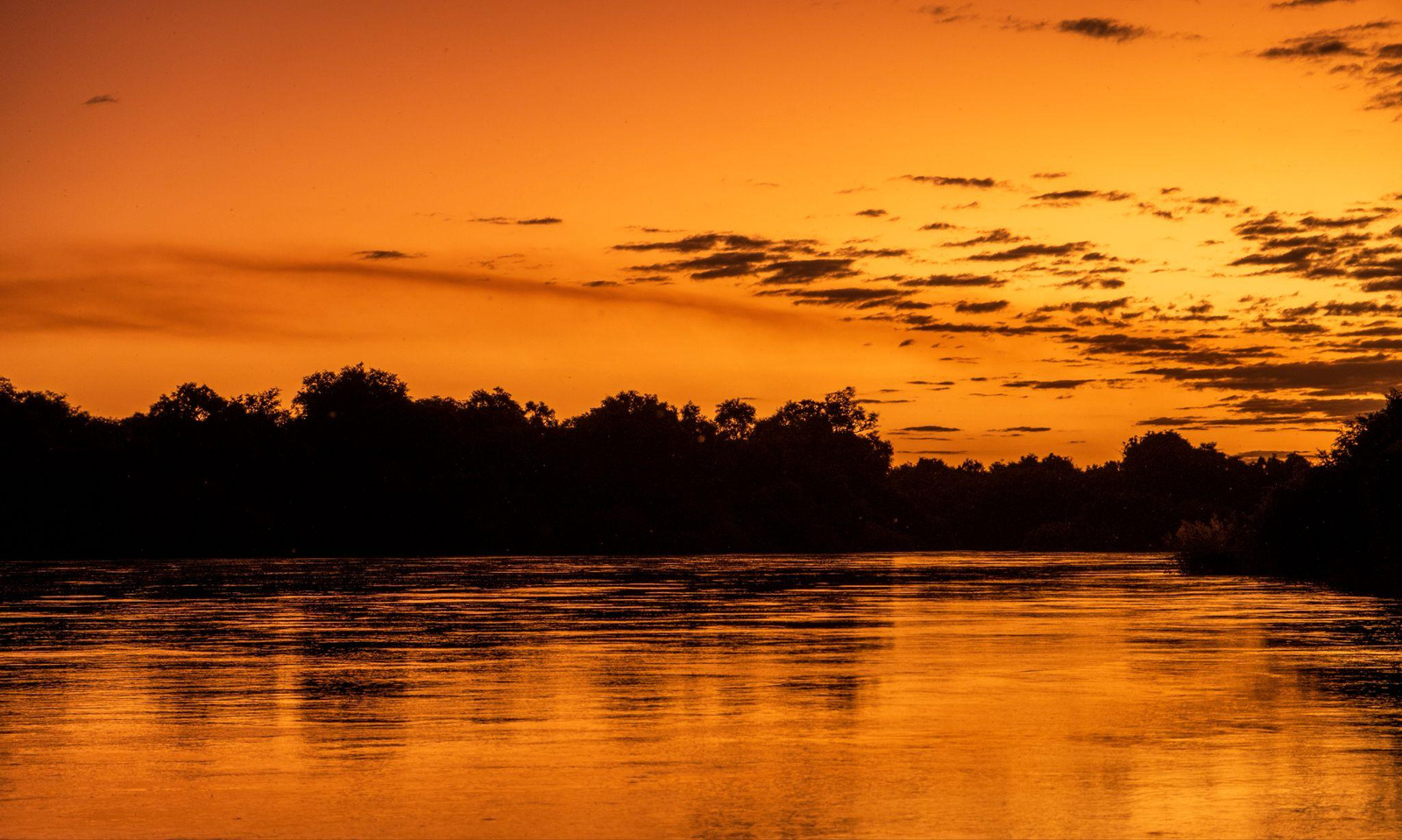
I’d hoped for an introduction to Zambian culture during my brief stay, and in witnessing the bond between communities, travellers and nature, there was no question I’d gotten one. Grateful, I watched the sky turn turmeric on my last evening as the sun sank into the horizon — another incredible display of colour.
Looking for more travel inspiration? Explore our Accommodation Tips page for other captivating reviews and discover your next dream destination.
Summer Rylander is a freelance travel journalist based in Nuremberg, Germany. She’s a member of the British Guild of Travel Writers and her work has appeared in Adventure.com, National Geographic Traveller Food, the i Paper, Travel + Leisure, and more.
| Cookie | Duration | Description |
|---|---|---|
| cookielawinfo-checbox-analytics | 11 months | This cookie is set by GDPR Cookie Consent plugin. The cookie is used to store the user consent for the cookies in the category "Analytics". |
| cookielawinfo-checbox-functional | 11 months | The cookie is set by GDPR cookie consent to record the user consent for the cookies in the category "Functional". |
| cookielawinfo-checbox-others | 11 months | This cookie is set by GDPR Cookie Consent plugin. The cookie is used to store the user consent for the cookies in the category "Other. |
| cookielawinfo-checkbox-necessary | 11 months | This cookie is set by GDPR Cookie Consent plugin. The cookies is used to store the user consent for the cookies in the category "Necessary". |
| cookielawinfo-checkbox-performance | 11 months | This cookie is set by GDPR Cookie Consent plugin. The cookie is used to store the user consent for the cookies in the category "Performance". |
| viewed_cookie_policy | 11 months | The cookie is set by the GDPR Cookie Consent plugin and is used to store whether or not user has consented to the use of cookies. It does not store any personal data. |