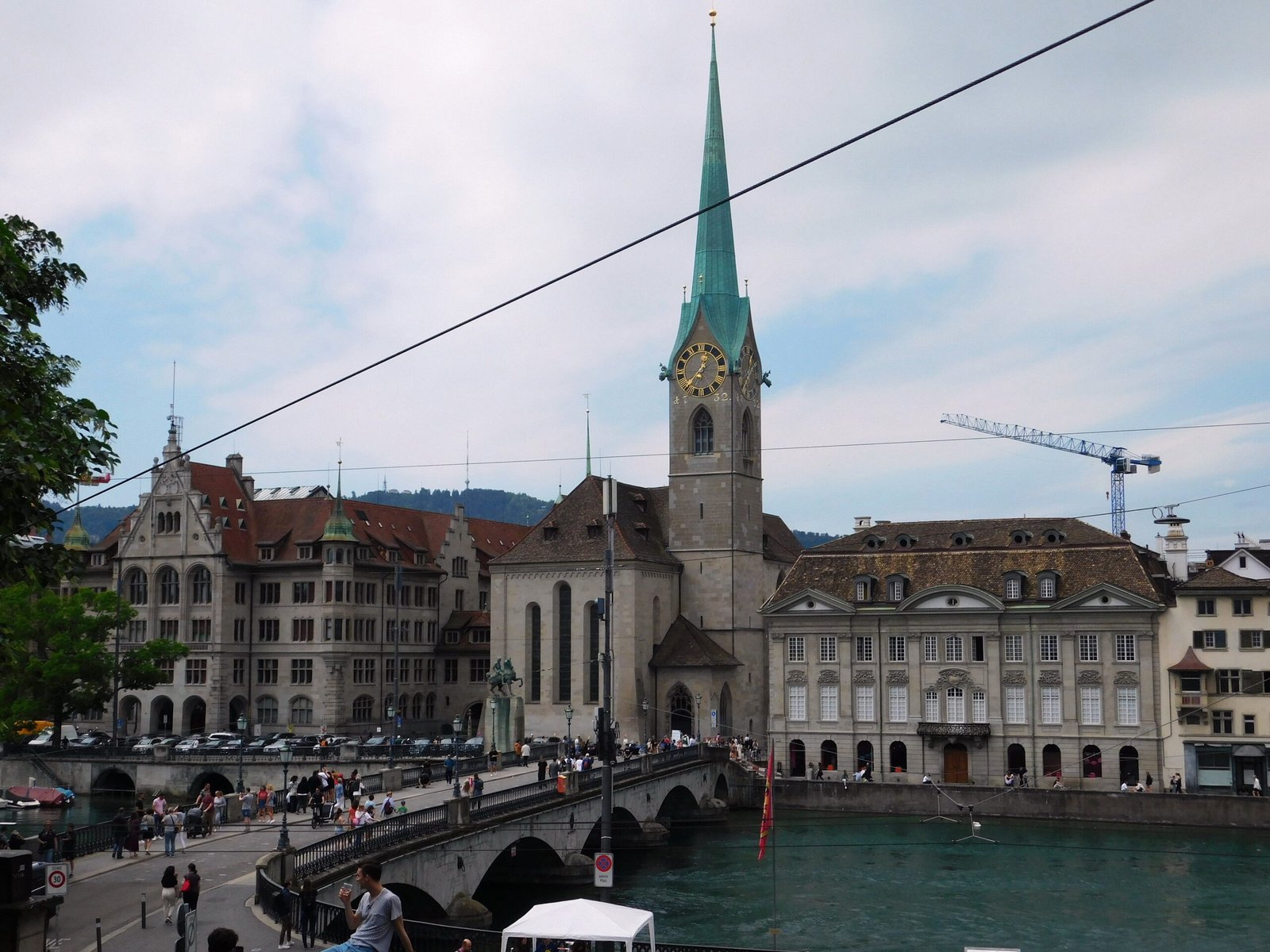
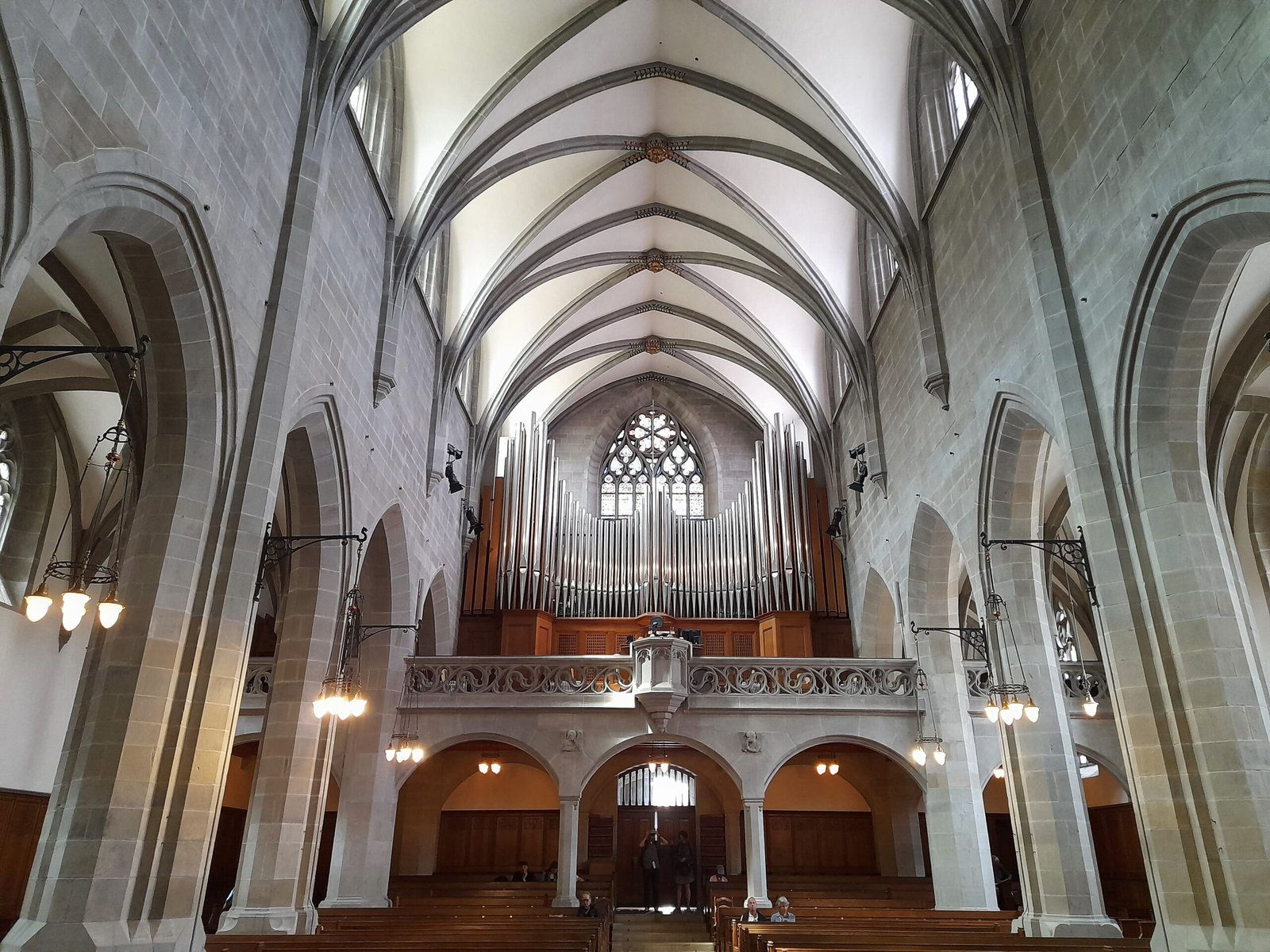

The Fraumünster church is one of the landmarks of Zurich. Its tall bell tower stands out against the skyline and serves as a point of reference for the city. If you are visiting Zurich, it is imperative that you take advantage of the chance to view Marc Chagall’s (1887–1985) stained-glass windows at Zurich’s Fraumünster. It is one of the most beautiful works of the great painter, and here is why it will offer you an unforgettable and immersive experience.
The church was part of the nunnery founded on this site in 853 by King Louis the German with his daughter Hildegard as abbess. Although the monastery was dissolved during the Reformation period, the church, after various additions and conversions, has remained until today.
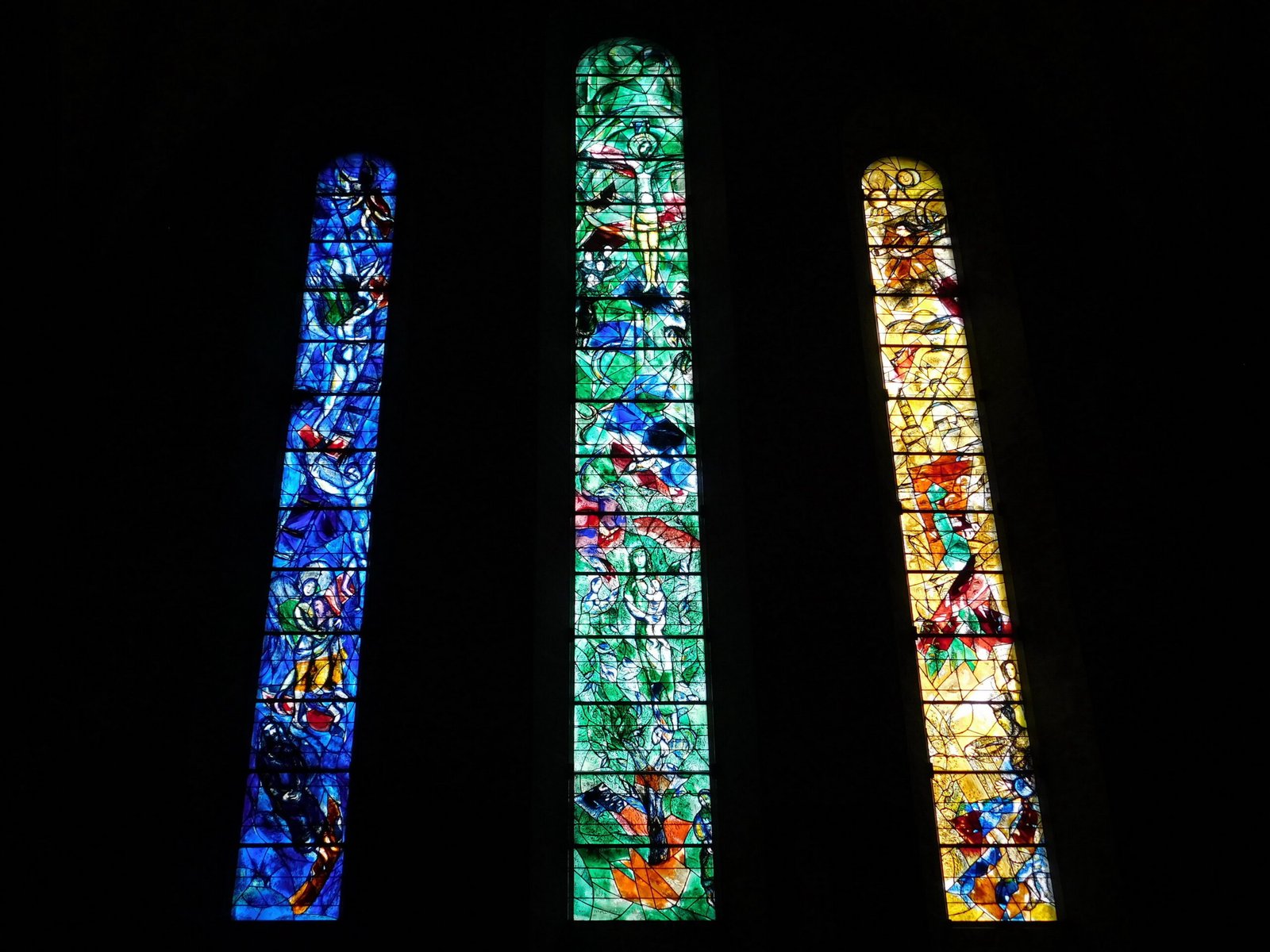
The church hides a number of unique artistic treasures. The cloisters of the south side are decorated with frescoes by Paul Bodmer, and the north transept has a window with a vision of paradise by Augusto Giacometti. However, nothing can be compared with the magic hidden in the 13th-century presbytery. Here, in 1970, Chagall created a series of stained-glass windows of incredible beauty and high religious symbolism.
Since 1960, Zurich city officials have searched for a suitable artist to create stained-glass windows for the historic church. So when 1967 Zurich hosted a large Marc Chagall exhibition, the Fraumünster pastor, impressed by his work, decided to offer the work to Chagall. The pastor was moved to make this choice by Chagall’s vibrant imagery and symbolism, as well as his message of love, peace, and faith. Chagall accepted and dedicated himself to the task despite being 80 years old at the time.
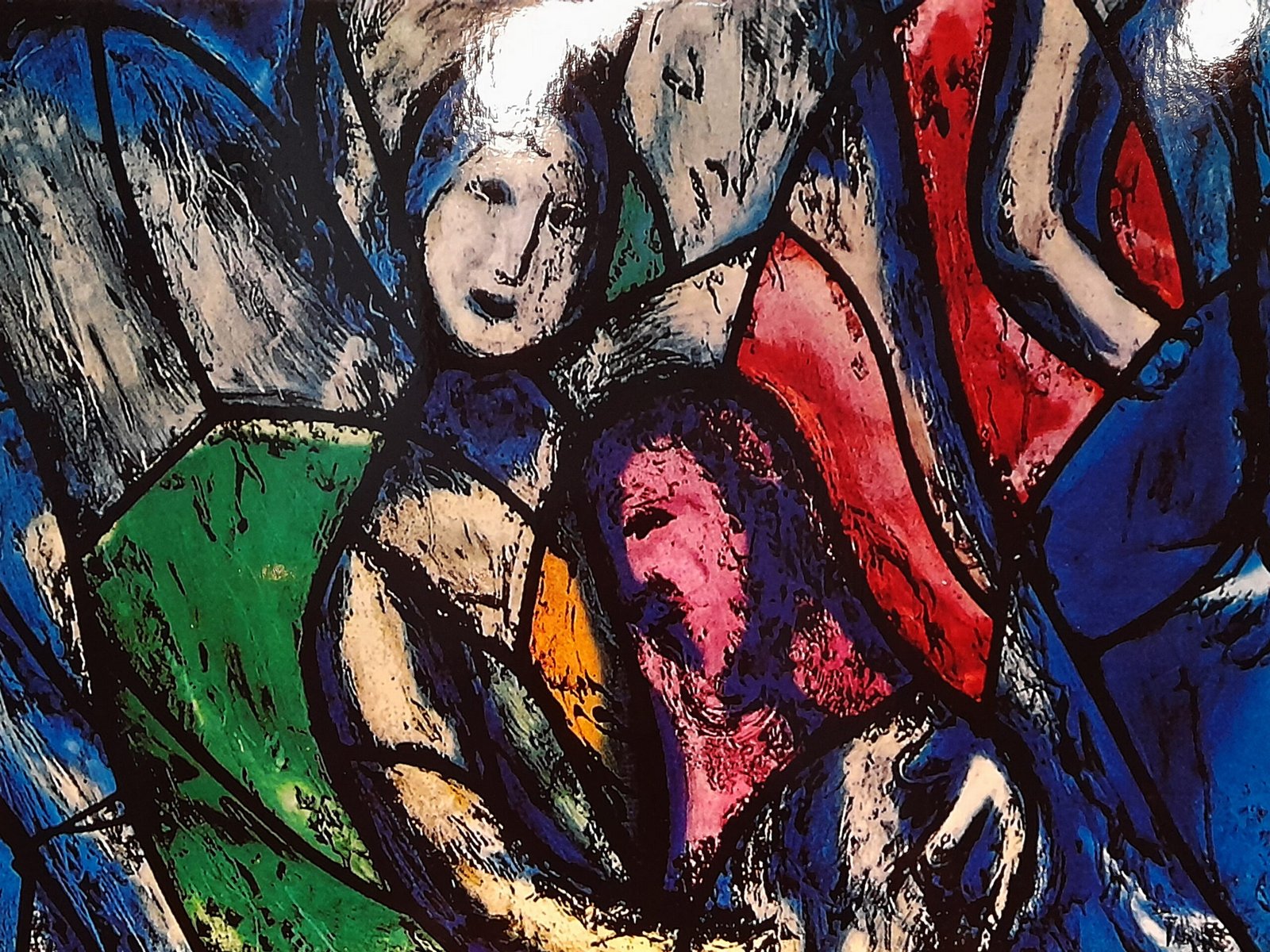
The windows depict biblical subjects, and a primary colour dominates each of them. The main window, dominated by green, depicts the life of Christ. To the left and right of this is the blue window showing the visions of Jacob, and the yellow window (known as the Zion Window) depicting King David and the New Jerusalem. On the north wall, the window is flooded with orange and depicts the Prophets, while the window on the south wall, with red and navy blue colours, is dedicated to the Divine Law. Chagall also designed the rosette depicting the Creation in the south transept of the church.
The instant you step inside the presbytery, your senses are overwhelmed by the colours that fill the room as the light from Zurich’s sky streams through the windows. You sit motionless in a corner to admire the artwork, feeling cut off from the rest of the world, as though all of your senses—aside from your eyes—are awakened.
In the design of the windows, Chagall used Christian and Jewish symbols and simplistic figures and shapes to make his work universal. He wanted his work to transcend religions. There are many theories about the symbolism of the artwork, but the most common is that the tall and narrow windows represent the vertical connection between heaven and earth. While blue and green represent the earth’s main elements (water and nature), and red and yellow symbolise the heavenly glow.
Marc Chagall once said, “If I create from the heart, nearly everything works; if from the head, almost nothing”. And this is really the way to enjoy the windows. Allow your heart to guide you, and this masterpiece will speak to your soul regardless of any symbolism.
The visit to the presbytery of Fraumünster is an unforgettable experience. If you happen to be in Zurich, don’t miss the opportunity to see this work of exceptional artistic merit and significant global influence.
If you enjoyed our article on Chagall Windows in Zurich, check out our Art and Culture page for more fascinating destinations for art lovers.
Antonis Tsapepas is co-founder of Voyagers Voice and founder of By Food and Travel, a website for people who want to travel and taste new things. Travelling is a way to escape, learn, discover unforgettable places, meet interesting people and try gastronomy from all over the world.
| Cookie | Duration | Description |
|---|---|---|
| cookielawinfo-checbox-analytics | 11 months | This cookie is set by GDPR Cookie Consent plugin. The cookie is used to store the user consent for the cookies in the category "Analytics". |
| cookielawinfo-checbox-functional | 11 months | The cookie is set by GDPR cookie consent to record the user consent for the cookies in the category "Functional". |
| cookielawinfo-checbox-others | 11 months | This cookie is set by GDPR Cookie Consent plugin. The cookie is used to store the user consent for the cookies in the category "Other. |
| cookielawinfo-checkbox-necessary | 11 months | This cookie is set by GDPR Cookie Consent plugin. The cookies is used to store the user consent for the cookies in the category "Necessary". |
| cookielawinfo-checkbox-performance | 11 months | This cookie is set by GDPR Cookie Consent plugin. The cookie is used to store the user consent for the cookies in the category "Performance". |
| viewed_cookie_policy | 11 months | The cookie is set by the GDPR Cookie Consent plugin and is used to store whether or not user has consented to the use of cookies. It does not store any personal data. |