
Barcelona has long been an exceptionally artistic city, and many notable artists have drawn inspiration from the city’s natural beauty. Among them are the modernist architects Antoni Gaudi and Lluis Domenech and other artists of contemporary urbanism. The motivation for my journey to Barcelona was to view the creative changes from the last time I was there, as the city is a magnet for all the artists that express their work in the streets of Barcelona.
As Barcelona is one of the most visited cities in the world, I knew that to walk around the city centre enjoying the tranquillity was to visit certain places in the early morning hours. Having lived in Barcelona for five years, I knew perfectly well that Barcelona artistic attractions are expressed in bustling places and less touristic areas.
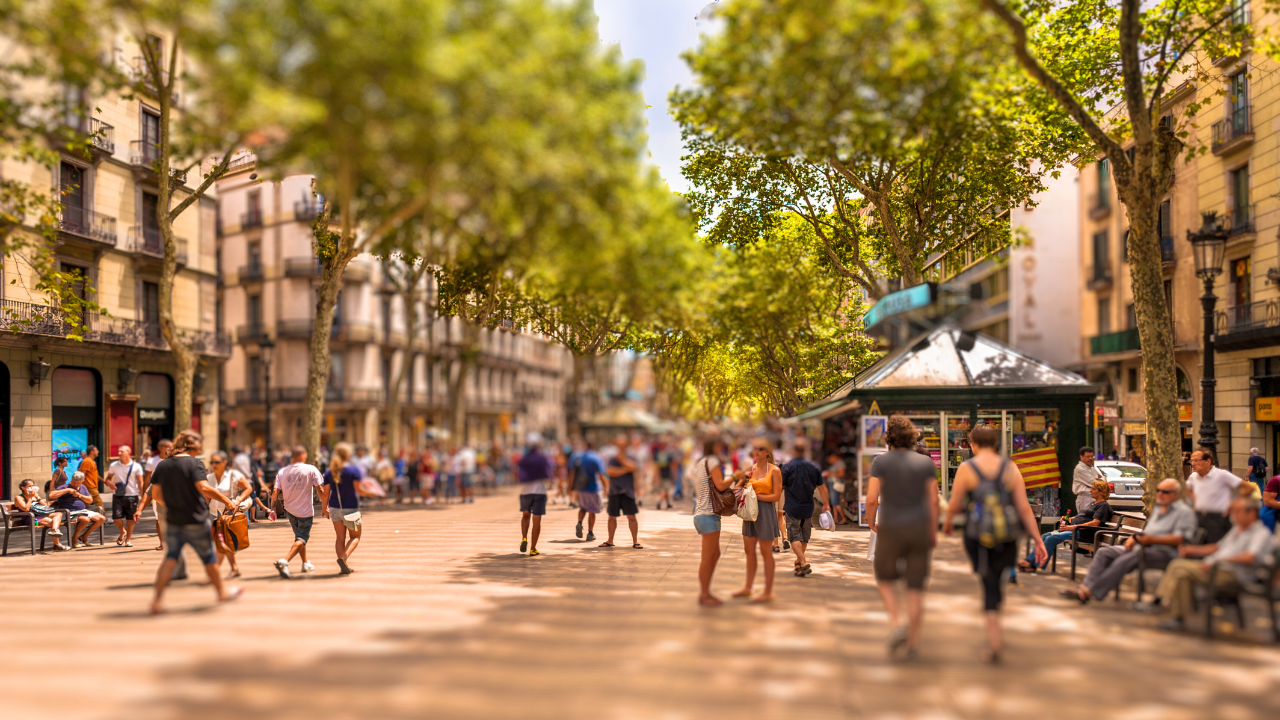
Together with my friend, Oscar, who’s from Barcelona, we headed towards the busiest street, Las Ramblas, where we could admire all the nuances that this street gave, such as the intricate mosaics of Joan Miro, the fantastic smells and sights of the Boqueria Market, and the majestic famed Plaza Reial, in a more unique than uncommon setting, i.e. the street nearly vacant.
Pushed by the surreal magnetism of the empty Ramblas, we started to walk in search of one of those cafés and restaurants with more than 100 years of history to have breakfast. We walked along both sides of the Ramblas, first to the café ‘Granja Viader’ (Raval Quarter), where the Cacaolat was invented in 1931, and then to the 4 Gats (Gothic Quarter), famous for being the usual place where Picasso met with other artists, but both were still closed.
Finding these two places closed, we opted to visit the stunning ‘Palau de la Musica,‘ designed by architect Lluis Domenech, where numerous performers from flamenco, jazz, classical music, and opera perform and sing every year. One of the attractions is that anyone is welcome to play the beautiful piano in the palace café. Fortunately, a young tourist began to play and captivate us with her melodies whilst we ate breakfast.
As the most famous works of Gaudi (Casa Mila, Casa Battlo, Park Guell and especially the Sagrada Familia) are always surrounded by tourists, we decided to enjoy places less known by tourists. The city is brimming with iconic sites, such as the Gothic-style church of Barcelona, which is currently under construction. Very close to Las Ramblas, you will find Gaudi’s beautiful palace, Palau Guell. Although it is a very central palace, it is unknown to the vast majority of tourists, even though in 1984, it was declared a World Heritage Site by UNESCO.
We also saw the magnificent baroque-style house designed by Gaudí towards the end of the 19th century for the upper class, Casa Calvet, an enclosed building that cannot be viewed inside and is unknown to most locals. At that time, the wealthy families all lived in the Eixample area (a neighbourhood not far from Plaza Catalunya), but over the years, they have moved to the Pedralbes area.
In addition to these modernist buildings, Barcelona offers an endless number of other works of contemporary urbanism. We enjoyed the Santa Caterina Market, with its new scintillating roof designed by Enric Miralles and Benedetta Tagliabue, the lavish 5-star Ohla Hotel with a very distinct blue facade, and the quirky roof formed by a set of mirrors positioned at different angles to get a polyhedric view of other places in Barcelona, Mercat Fira de Bellcaire Els Encants. Mercat Fira de Bellcaire Els Encants is also one of the oldest markets in Europe, which until 2013 was an open-air market.
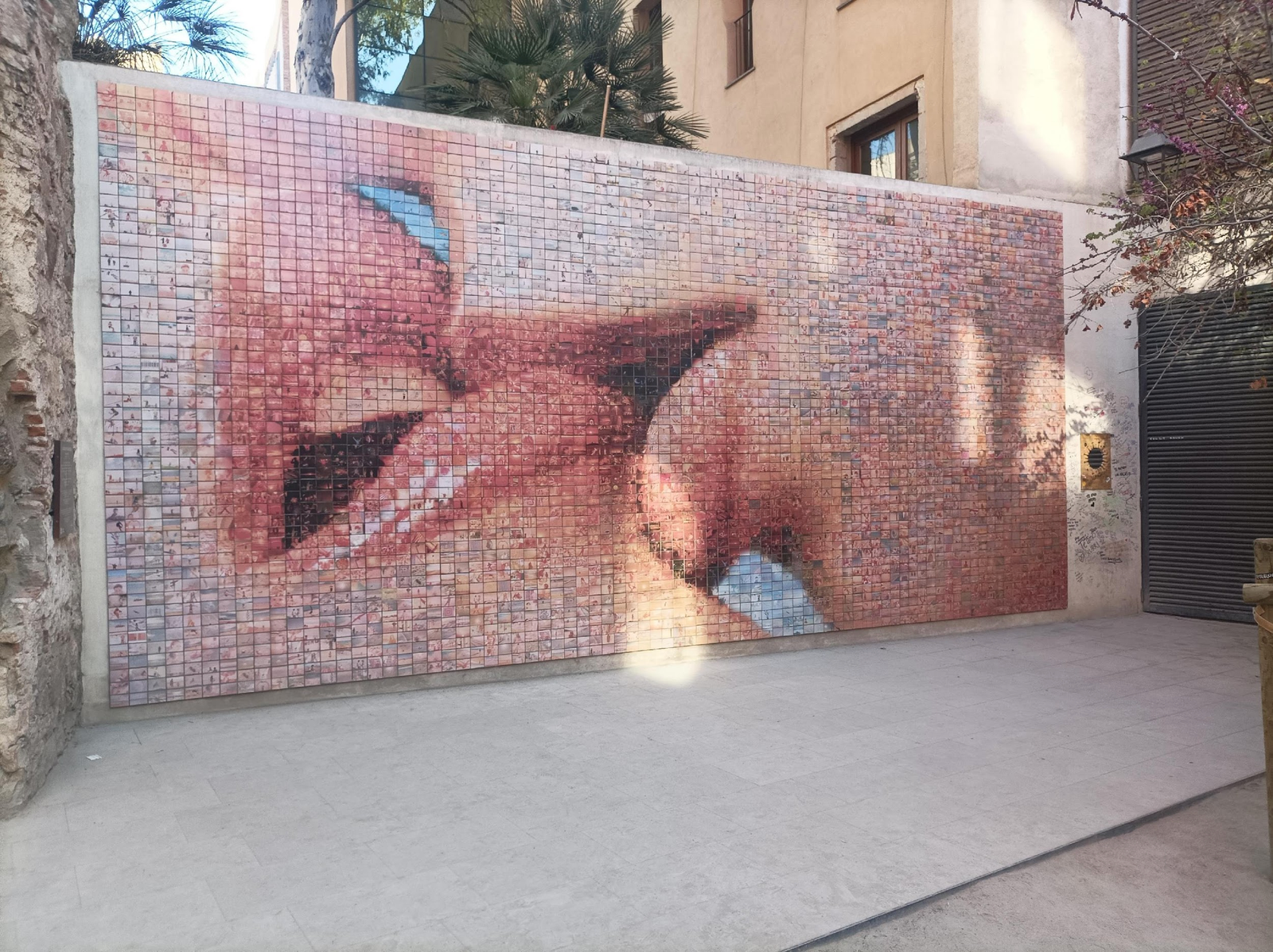
As for the murals, Barcelona has always been a city at the forefront and still is. Street art can be found on several corners of Barcelona’s walls, which is essential as it maintains the city’s character. One of the most beautiful and visited works is called ‘The World Begins with every kiss.’ This work is located in an alley very close to the Barcelona Cathedral.
It is a photo mosaic composed of 4 thousand images, collaborated between the artist Joan Fontcuberta and the newspaper El Periodico, which asked its readers to send photos based on a moment of freedom. The photographer Fontcuberta, together with the collaboration of the ceramist Antoni Cumella created a mural of 4 thousand tiles represented in a kiss.
The city of Barcelona is at the forefront of the artistic field and a sustainable and environmental level. The city has several compelling parks, including Ciutadella Park, which is full of visitors and Guell Park (not a free park). Gran Clariana Park, on the other hand, pleasantly pleased me—an ecological park since it employs the Sustainable Urban Drainage System to tackle climate change. In addition, the Municipality of Barcelona has pledged to remove cars and give green space to its citizens.
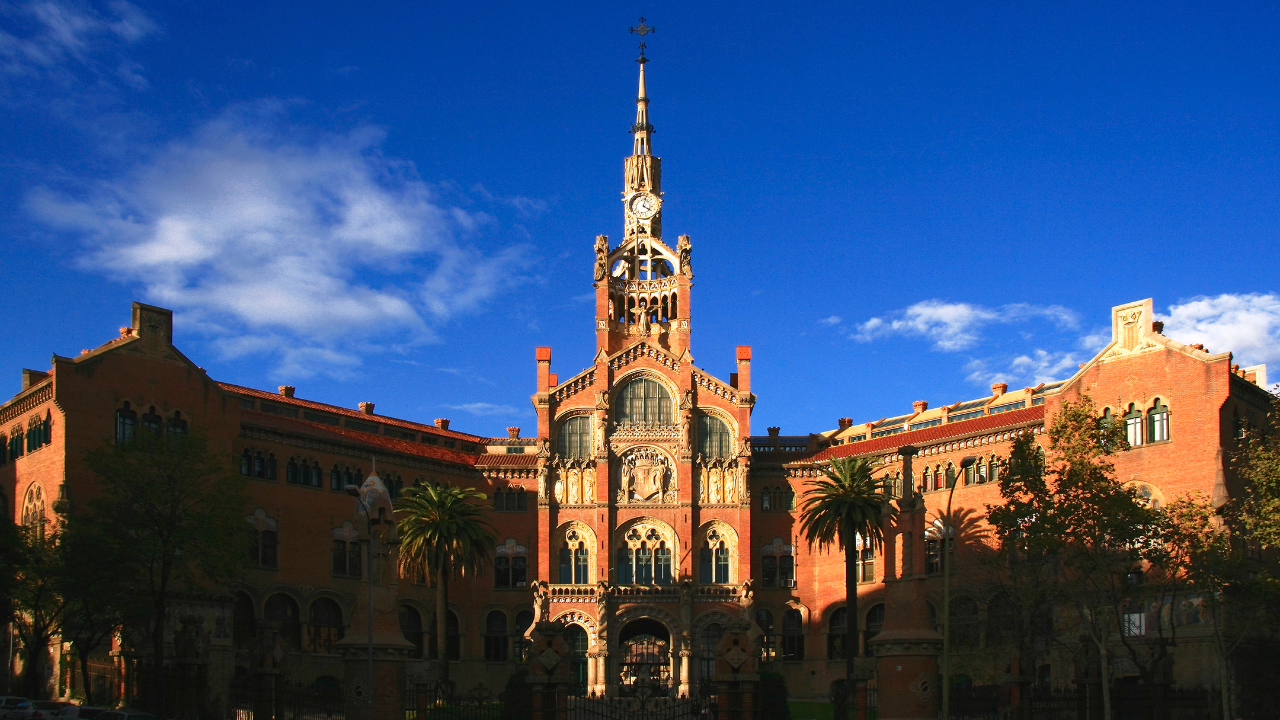
I could not leave Barcelona without visiting the Hospital San Pau, the spectacular work of Lluis Domenech, as you cannot visit the Catalan city by not passing near this majestic work, one of the pinnacles of everything the city stands for and one of the most important Barcelona artistic attractions.
If you are looking for other cultural destinations, visit our website’s Art and Culture page.
| Cookie | Duration | Description |
|---|---|---|
| cookielawinfo-checbox-analytics | 11 months | This cookie is set by GDPR Cookie Consent plugin. The cookie is used to store the user consent for the cookies in the category "Analytics". |
| cookielawinfo-checbox-functional | 11 months | The cookie is set by GDPR cookie consent to record the user consent for the cookies in the category "Functional". |
| cookielawinfo-checbox-others | 11 months | This cookie is set by GDPR Cookie Consent plugin. The cookie is used to store the user consent for the cookies in the category "Other. |
| cookielawinfo-checkbox-necessary | 11 months | This cookie is set by GDPR Cookie Consent plugin. The cookies is used to store the user consent for the cookies in the category "Necessary". |
| cookielawinfo-checkbox-performance | 11 months | This cookie is set by GDPR Cookie Consent plugin. The cookie is used to store the user consent for the cookies in the category "Performance". |
| viewed_cookie_policy | 11 months | The cookie is set by the GDPR Cookie Consent plugin and is used to store whether or not user has consented to the use of cookies. It does not store any personal data. |