It’s almost spring, and I don’t want to be among the hustle and bustle of the big city. For a long time, I’ve yearned to return to my roots, the little town where I was born, at the foot of the Sierra del Benicadell. We get in the car and drive to the city’s southern exit, through the well-known hooks roundabout, towards Alicante.
We are leaving behind the magnificent towns of L’Horta (Alfafar, Sedavi, Benetusser, Albal, Catarroja, Massanassa) and La Ribera (Benifaió, Alginet, Alcudia, Carlet, Alzira) during our short travel of less than an hour. We are gradually making our way forward, leaving behind the historic city of Xativa and entering the L’Olleria Tunnel.
The first town is L’Olleria, which is home to a part of my family. We travel through communities that bring back memories, such as Aielo de Malferit (home of singer Nino Bravo), Ontinyent, Agullent, Albaida, and eventually, my town, Atzeneta de Albaida —known as the balcony of the valley because of its advantageous location at the source of the Sierra del Benicadell.
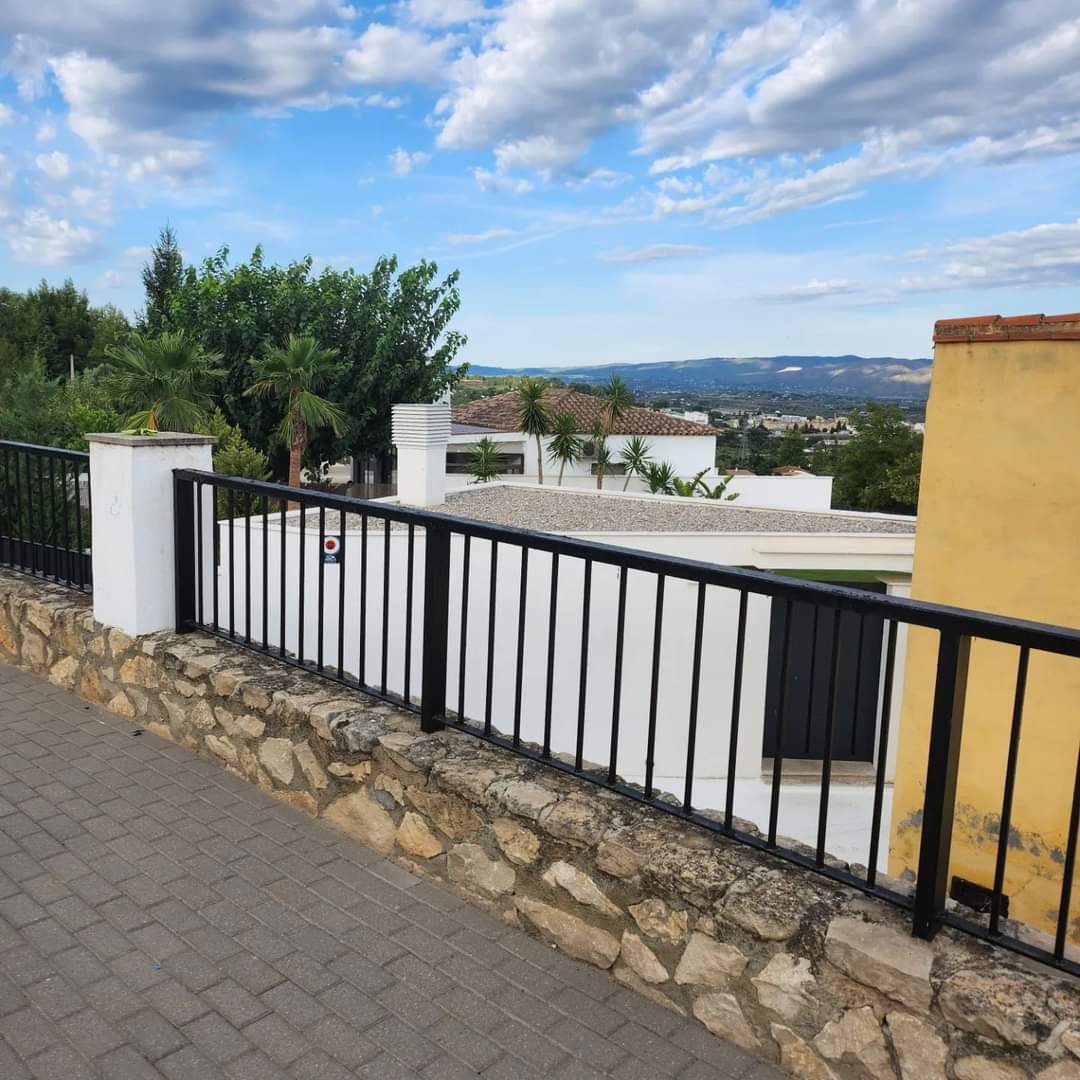
We approach the town from the north, which used to be a nursery school and go along the main road, nearly entirely traversing the city. We halt in front of my grandparents’ house, at the entrance of the old school, which is now the town council seat. There is a great view of the mountain from the room where they slept, which provides us with stunning sunrises throughout the year and fills the home with the pure air of the surrounding fields.
It is already mid-morning, and as a good Valencian, it is time to comply with the sacred brunch tradition. The best place is the Burger, a must-visit sanctuary for lovers of good homemade hamburgers and tasty and unique sandwiches.
With a full stomach, we explore the water path and learn about the town’s history. Atzeneta gets its name from the Zenetes, an old Muslim tribe with the brilliant idea of settling in this location. The Muslim origins of the town may still be seen today in the layout of its oldest, most lengthy and meandering streets, and, most all, in the most important building bequeathed to us by the ancient Zenetes.
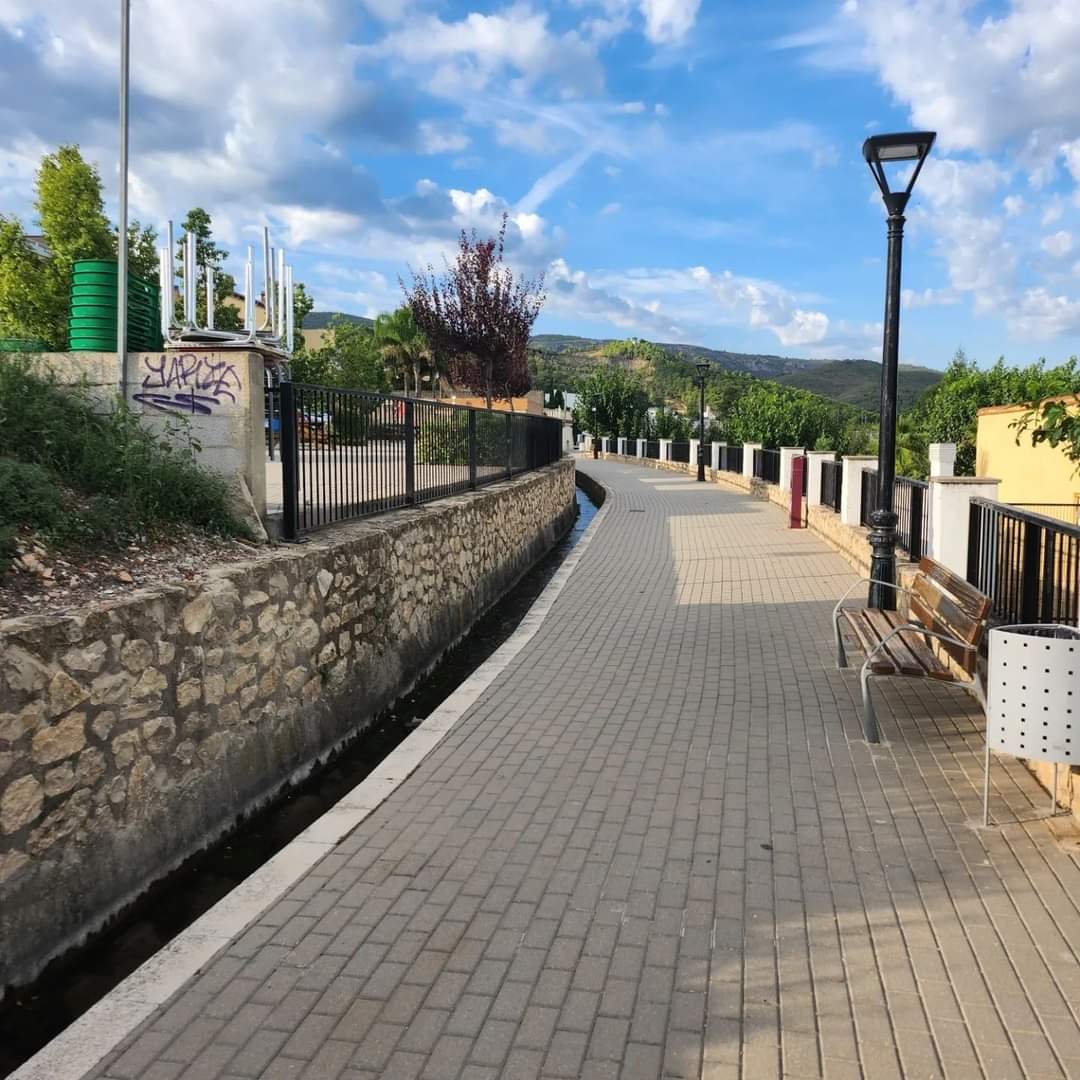
Recently restored and transformed into a beautiful and pleasant walk, we can still see how, at the back of the houses that overlook this old ditch, there is still a kind of gate through which you can directly access the ditch, and people who, by tradition and custom, continue to wash their clothes and utensils in it.
On the other side, we see the cultivated fields, basically olive and almond trees, although there are also many fruit trees, which give the whole a magnificent colour.
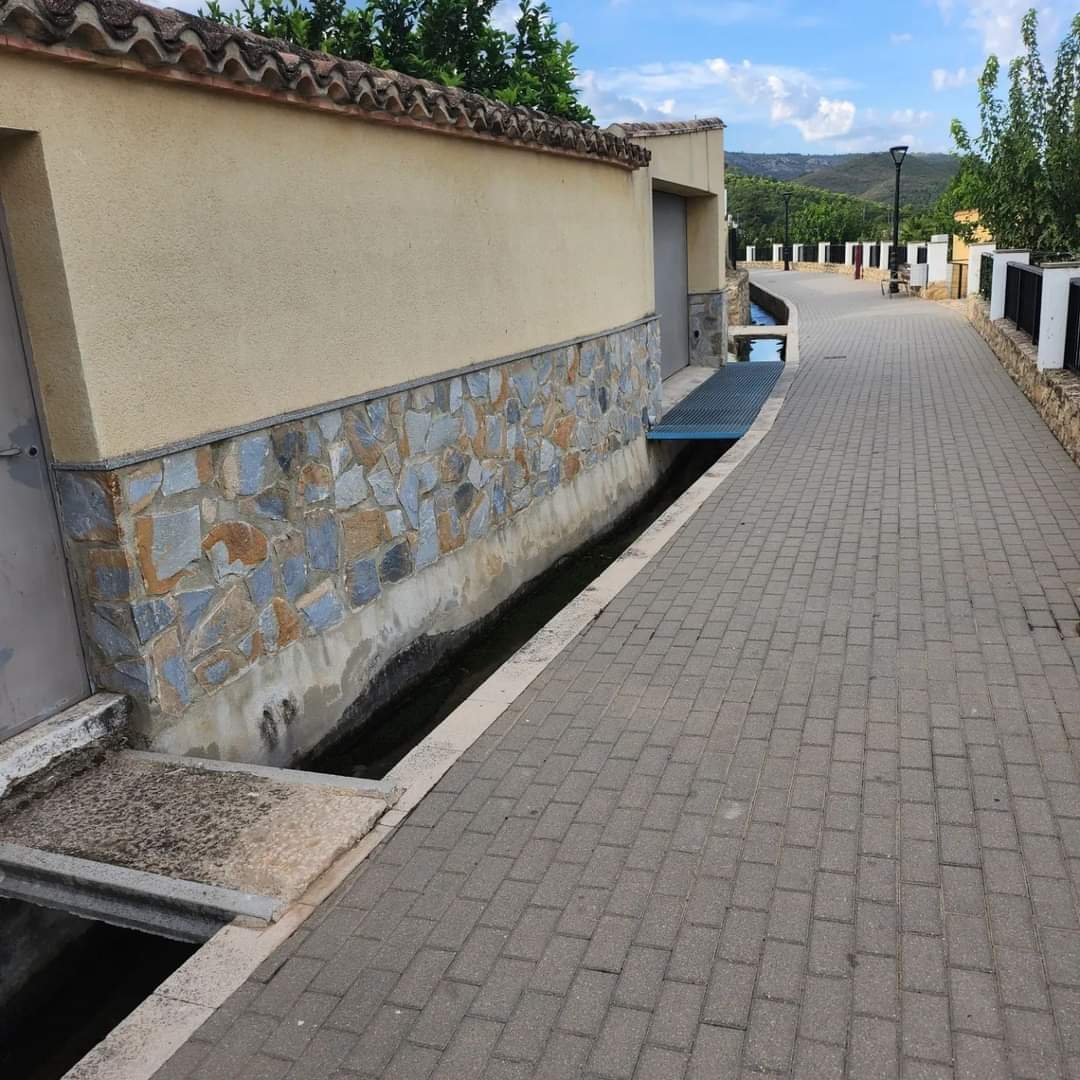
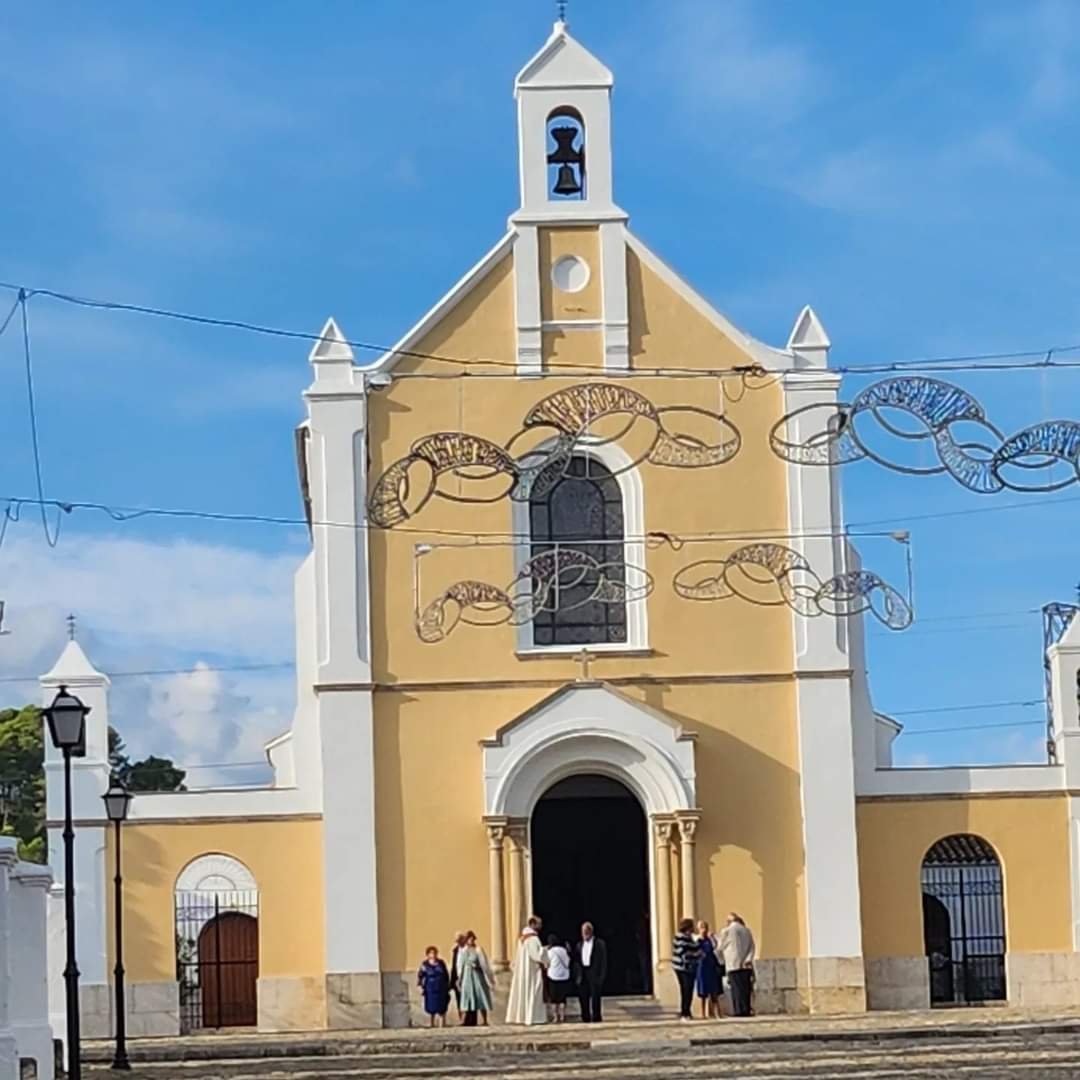
We arrived at the end of the promenade, at the foot of the historic Monastery of Cristo de la Fe, dating from the 17th century and recently restored, which merits its own essay. We return to the town centre and walk down the main road, stopping roughly in the middle to visit the essential feature of the old ditch, the fountain of the 21 jets, where pure and crystalline water flows—channelled through the culvert from the Pou Clar spring in the neighbouring town of Ontinyent—a true delight for the senses.
Atzeneta de Albaida, a town of artists
While Atzeneta is a town of excellent artists, four disciplines stand out: esparto grass, bells, stone, and music. The prestigious Museo de las Artesanias de Athesanias de Atzeneta, contains a perfect representation of the first three. Several of the most famous bells in the entire Valencian area, such as the bell towers of Lliria and Benaguacil, were created at Atzeneta. Bells as significant as those of the Miguelete in Valencia and the Fadr in Castelló de la Plana have been repaired.
The Roses family, great artisans and master bell ringers recognised throughout Spain have carried out most of these performances. Also, esparto grass occupies a prominent place within the local crafts, with great specialists throughout the history of the town. Carved stone is another well-known craft. Atzeneta has always had great stonecutters and stone artisans, whose works can be found in places as diverse as the restoration of the altarpiece in the Patriarch’s church in Valencia and the Santo Domingo Convent nearby Xativa.
We decided to go and dine at El Balconet, just below the old Hermitage of Christ, in the same area as the Municipal Pool and behind the sports centre, where, on its incredible terrace, we can enjoy a tasty meal. At the same time, we return to see the ditch of the port and to remember the pleasant walk through history that we have enjoyed today.
We’ll have to return another day to see the Cristo de la Fe Monastery, the historic Church of San Juan Bautista, and the town’s fourth most prominent creative manifestation, music.
It’s finally time to head back to the big city, back to reality, to the hustle and bustle of the streets, to the hectic life of the capital, but with what we experienced today, the sensations, the memories, and the desire to return as soon as possible, in our hearts.
If you are looking for other cultural destinations, visit our website’s Art and Culture page.