

Rahmat was just 14 when he embarked on a perilous journey from Afghanistan to the UK, stepping into the shadows of an uncertain future after the 9/11 attacks and the subsequent US invasion. But for Rahmat, war was nothing new—he had been a refugee for as long as he could remember.
When he was around four years old—he estimates by the Islamic calendar, as he no longer knows his exact age—his family moved to Pakistan to escape the Taliban.
After 9/11, they returned to Afghanistan for a few years. There, his father was executed by the Taliban.
Rahmat is from Tagab, a small village situated two hours north of Kabul. “My home village is one of the most beautiful places in the world,” he assures me. “You wake up to birdsong and sunshine, surrounded by stunning green mountains and fresh springs. It is… heaven.”
However, beauty does not always mean safety. If you Google Tagab, you’ll find starkly contrasting images: a grey, dusty valley filled with army convoys, American soldiers wielding M249 machine guns, and Taliban fighters with their hands raised in surrender.
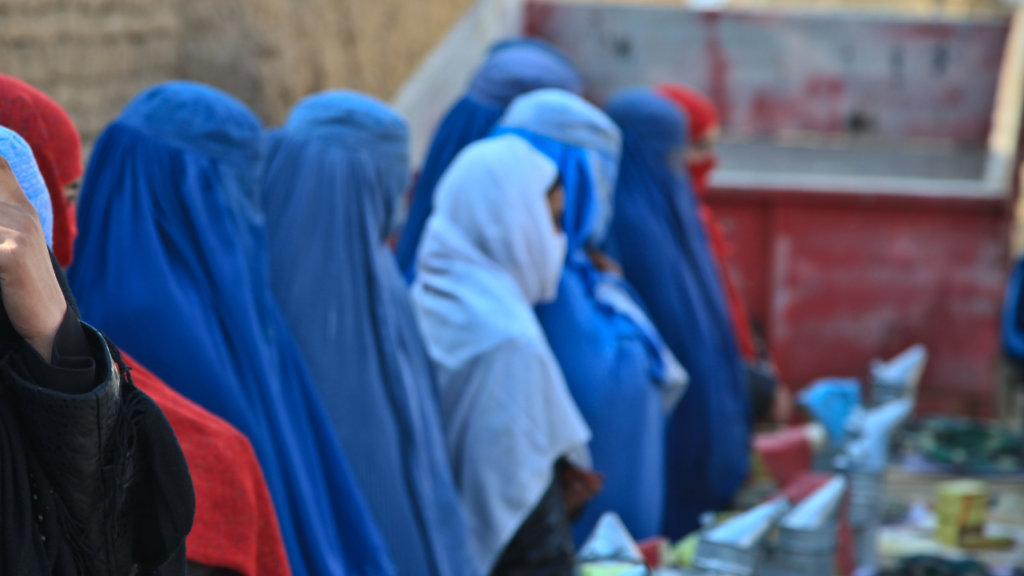
The town has a significant indigenous population, which Rahmat describes as being “kept in darkness from the outside world.” The town felt frozen in time. They wear traditional clothing––white hats, among other garments—and hold beliefs distinctly different from those of the Afghans.
Alongside the indigenous people, many Taliban operatives scouted for young recruits to build their terrorist group, often sending children and teenagers to Pakistan for training. They rarely took them by force; instead, they convinced parents it was for the sake of Allah.
If the Taliban couldn’t persuade them, they would kill them.
“The Taliban only know 5% of the Koran, not the other 95%, which makes them especially dangerous,” Rahmat explained.
After years of turmoil, about half of the Afghan population fled to countries like Europe, Pakistan, India, and Iran. Many countries opened their borders, allowing refugees to enter without passports or visas. But Rahmat’s family chose to remain in Afghanistan.
After years of living in isolation beside the indigenous people and the Taliban, Rahmat’s father decided to build a road connecting their village to the capital. Over time, the Afghan community began establishing clinics and schools, and attitudes in the area began to shift.
The Taliban saw this progress as a direct challenge to their authority, fearing that the road would make the village more accessible to the government. They requested that Rahmat’s father cease construction, but he refused, and they executed him.
In the wake of his father’s death, the Taliban targeted anyone with government ties, hanging their bodies from trees. They took control of the village, forcing Rahmat’s uncle to flee. They beat his uncle to confess to working for the government—something he did not do—before eventually letting him go.
With the Taliban’s threat looming, Rahmat’s uncle decided to send him away. However, Rahmat was separated from his cousin, who later ended up back in Afghanistan, where he was sadly killed.
Rahmat was smuggled to the UK by an agent. When agents work together, they form a chain; one takes you to Turkey, another picks you up and takes you to Greece, and the first agent communicates with the last, who has the power to change the journey.
Eventually, Rahmat made it to the UK, where he was placed in the foster system and attended school for two years. However, his asylum claim was repeatedly refused.
During this time, he met a Polish girl, and they quickly fell in love. The two eloped, and soon after, they discovered she was pregnant. Meanwhile, Rahmat was sent back to Afghanistan.
Suddenly, he found himself with a wife in Peterborough and a son he had never met. Determined to return to the UK, he travelled to the Greek island of Lesbos and followed the migrant route—but the borders closed, his visa was overturned once again, and he had to stay in a camp of 8,000 people which was only meant to house 2,000.
“If anyone attempted to leave, they’d put them behind bars.”
Rahmat tried everything, from fake ID cards to working with NGOs on the island, but nothing worked. As such, after months of being stuck on the tiny, desolate island, he negotiated with the watchman to take him in a small boat back to Turkey. There, Rahmat could once again attempt to get back to the UK.
“It was difficult to negotiate as we didn’t speak the same language. We wrote our prices in the dust on the boat.”
On the day of his departure, he learned that taxi drivers refused to take refugees, causing him to arrive late to the boat. By the time he got there, 20 other refugees had heard about the boat and wanted to travel with him. Unfortunately, it was pointless; they were discovered and sent back to Greece.
Four months later, Rahmat made another deal with a different boat owner and secretly rowed himself to Turkey in the middle of the night.
Once there, Rahmat flew to Afghanistan to obtain a new passport, then travelled to Pakistan, where he was finally able to secure his UK visa. In December 2016, he returned to England and met his one-year-old son for the first time.
Finally reunited with his wife and son in London, Rahmat is now pursuing work and studying social science.
“I’ve never had the opportunity to study before,” he said.
Rahmat hopes to build a future where no child has to make the journey he did.
This is the third of four intriguing articles Amy Aed shared with me about the compelling interviews she conducted with refugees in the U.K. and discussed why their journeys ought to be publicised. Once again, Amy explored the theme of survival as a journey. Her aim and my hope is to convey these experiences through the lenses of safety and self-determination, reflecting our objective of inspiring readers about how travel impacts identity and purpose.
If you are looking for more cultural stories, visit our website’s Art and Culture page.
Amy Aed is a Welsh journalist with over a decade of experience reporting from some of the most remote corners of the world. Her work focuses on telling untold stories that intersect culture, adventure, and social issues
This article was written by Amy and is based on the personal testimony Rahmat gave her when she interviewed him over several weeks. Rahmat is an Afghan refugee living in the U.K., who has shared his journey with the knowledge and has given consent for publication. The account is drawn from the interview conducted by Amy, during which Rahmat provided details about his experiences. Whilst every effort has been made to accurately represent his story, certain details, including specific dates, locations, and personal identifiers, may be inaccurate. The views expressed in this article are those of Rahmat, and do not necessarily reflect the official stance of Voyagers Voice. The purpose of this piece written by Amy is to focus attention on the obstacles that refugees face, such as conditions that exist in some asylum-seeking institutions. It is essential to note that, whilst we aim to give reliable and unbiased information, the article does represent Rahmat’s own story and experiences, which are unique to him. Voyagers Voice has made the necessary efforts to verify the contexts offered in accordance with our editorial standards. However, due to the delicate nature of refugee and asylum situations, certain information may have been altered or deleted to protect the persons concerned, follow ethical journalism practices, and avoid legal ramifications.
| Cookie | Duration | Description |
|---|---|---|
| cookielawinfo-checbox-analytics | 11 months | This cookie is set by GDPR Cookie Consent plugin. The cookie is used to store the user consent for the cookies in the category "Analytics". |
| cookielawinfo-checbox-functional | 11 months | The cookie is set by GDPR cookie consent to record the user consent for the cookies in the category "Functional". |
| cookielawinfo-checbox-others | 11 months | This cookie is set by GDPR Cookie Consent plugin. The cookie is used to store the user consent for the cookies in the category "Other. |
| cookielawinfo-checkbox-necessary | 11 months | This cookie is set by GDPR Cookie Consent plugin. The cookies is used to store the user consent for the cookies in the category "Necessary". |
| cookielawinfo-checkbox-performance | 11 months | This cookie is set by GDPR Cookie Consent plugin. The cookie is used to store the user consent for the cookies in the category "Performance". |
| viewed_cookie_policy | 11 months | The cookie is set by the GDPR Cookie Consent plugin and is used to store whether or not user has consented to the use of cookies. It does not store any personal data. |